
On this page
Can you give your dog the same probiotic capsule you take? My short answer is yes for a healthy adult dog in a pinch, but I would not make it a habit.
I get this question when owners run out of dog chews and stare at their own bottle. The worry makes sense. You want to help loose stool today without causing a new problem tomorrow. The strain inside matters more than whether the label says human or canine.
A 4-year-old, 52-pound mixed breed came in with soft stool after a weekend boarding stay. The owner had already sprinkled half a human Lactobacillus capsule on dinner for three days. Stool was still pudding-like by day 4, appetite normal, no vomiting, energy good. She asked whether to keep going or switch to a dog formula with clear feeding directions. We stopped the human product, kept meals bland and consistent for three weeks in, and talked about what to check before sharing any supplement. That decision point is what this guide covers.
Why a human strain is not automatically a dog strain
Dogs and people share some Lactobacillus and Bifidobacterium species, but the gut environment, diet, and resident microbes differ. A strain selected to survive human stomach acid and stick to human gut lining may pass through a dog without colonizing well. That does not make it toxic. It makes it unpredictable.
This is also why label diversity can mislead. In one recent canine trial, “Diversity metrics did not distinguish non-responders from responders.” I cite that finding from Frontiers in Veterinary Science because it reminds me not to judge a product by CFU count alone. Response depends on the dog, the diet, and the reason for loose stool.
Fit matters more than force.
The trade-off I see when owners share capsules
A owner of a 9-year-old, 18-pound beagle tried a high-CFU human probiotic after antibiotics. By day 10 the dog was gassier, still had mucus on the stool, and had started refusing breakfast. The capsule also contained xylitol-free flavoring and a prebiotic dose meant for a 150-pound person, not an 18-pound senior. We paused the product, called the prescribing veterinarian about the antibiotic course, and reset to plain food plus water monitoring. Stool firmed over the next week once the extra ingredients were out.
That case shows the real risk. It is rarely the live bacteria. It is the extras, the dose, and the missed diagnosis. Human products may include xylitol, added vitamin D, iron, or herbal blends that dogs do not need. Dosing is another gap. A 50-billion CFU human capsule split by eye gives no consistent daily intake for a small dog.
Chronic pancreatic or small-intestinal disease complicates this further. For example, “EPI is treated by pancreatic enzyme replacement therapy, nutritional management (low-residue diets with moderate fat content), and supplementation of cobalamin.” I pull that standard from the Journal of the American Veterinary Medical Association. A probiotic will not replace enzymes or B12 management in that dog.
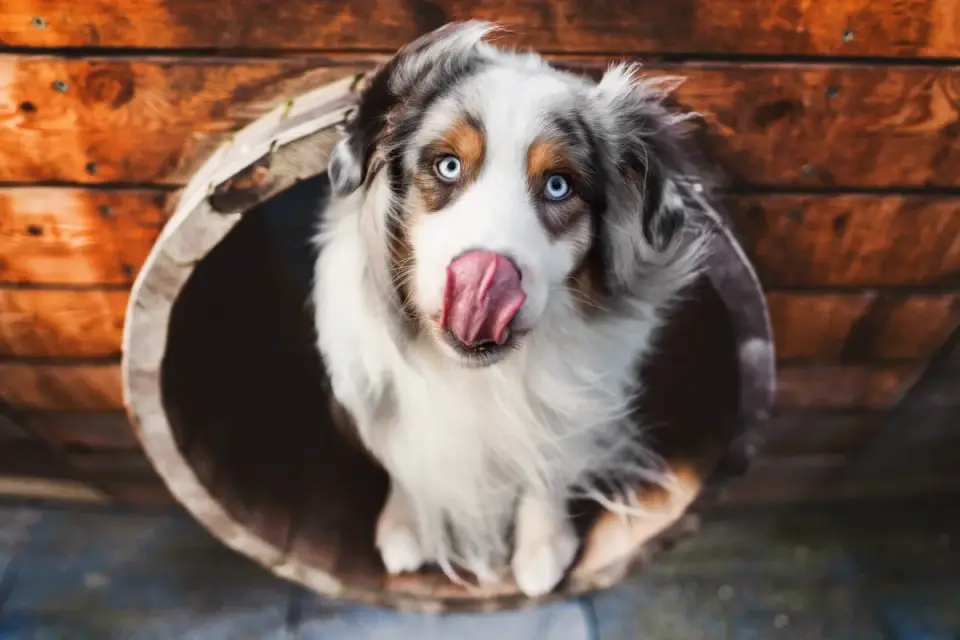
My three-step check before any dog gets a probiotic
Use this order. It takes five minutes.
1. Rule out red flags. Contact your veterinarian promptly for bloody stool, repeated vomiting, lethargy, belly pain, fever, dehydration, weight loss, or diarrhea lasting more than 48 hours in an adult or 24 hours in a puppy or senior. Also call if your dog takes immune-suppressing drugs, has kidney or liver disease, or just finished antibiotics. Those dogs need direct guidance, not a store swap.
2. Read the human label like a vet tech. Check the full ingredient panel, not just the front. Avoid xylitol or birch sugar, added vitamin D, iron, garlic, onion extract, and proprietary herbal blends. Look for strain names with numbers, CFU guaranteed through expiration, storage directions, lot number, and a company contact. If you cannot verify what is inside, do not guess.
3. Match the product to the dog. Choose a dog-labeled probiotic with feeding directions by weight, a NASC or similar quality seal when available, and no extra flavors your dog avoids. Keep diet, treats, and chew exposure steady for 2 to 3 weeks so you can judge stool, gas, appetite, and energy. For dogs that refuse chews, a simple liquid or powder format you will actually give daily beats a stronger formula you skip, a point I also cover in Liquid Longevity Supplements for Dogs That Refuse Chews (/articles/liquid-longevity-supplement-for-dogs-that-refuse-chews/).
Keep notes. Date, product, dose, stool score, appetite.
The edge case that changes my advice
A 6-year-old, 71-pound Labrador on a stable cardiac diet developed intermittent soft stool after training treats increased. The owner wanted to add both a human probiotic and CoQ10 from his own cabinet. We slowed down. Heart medication cases need pharmacist or veterinarian review for interactions and for sodium or vitamin D load from combination products. I pointed him to our explainer on Can Dogs on Heart Medication Also Take CoQ10? (/articles/can-dogs-on-heart-medication-also-take-coq10/) and asked him to bring both labels to his next visit.
By week two on consistent meals, fewer rich treats, and a dog-specific probiotic from his veterinarian, stool logs showed firmer evening stools by day 12. The lesson was not that human probiotics are dangerous. The lesson was that layering human supplements onto a medicated, diet-managed dog hides the signal.
Watch for the observable sign that should change your next action. If stool firms and holds for seven straight days, stay the course. If gas, vomiting, appetite loss, or blood appears at any point, stop the supplement and call your veterinarian.
Where I land
I keep human probiotics as a short bridge only. One to two days when you have no dog option, the dog is otherwise healthy, the label is clean, and the dose is conservative. Then switch to a dog-labeled product with weight-based directions.
The strongest counterargument is fair. Some human strains have canine data and cost less per CFU. I still land on dog-specific for most owners because fit, labeling clarity, and quality control matter more day to day than raw CFU. Age-related gut and immune shifts also argue for formulas tested in dogs, similar to how I think about collagen and cellular support with age in How Collagen Production Changes as Dogs Age (/articles/how-collagen-production-changes-as-dogs-age/).
Start from what you can see today. Check red flags, read the label, then match the product to your dog.
For related context, read Can Dogs on Heart Medication Also Take CoQ10?.
For related context, read Does a Senior Dog Need More Resveratrol Than an Adult Dog?.
Frequently asked questions
Can I give my dog my probiotic for one day?
For a healthy adult dog with mild soft stool and no red flags, a single clean-label dose is low risk, but check for xylitol, iron, excess vitamin D, or herbs first and ask your veterinarian if your dog is very young, senior, medicated, or chronically ill.
Do dogs need dog-specific probiotic strains?
They do not strictly require them for safety, but dog-labeled strains and weight-based directions usually give more predictable results than splitting a human capsule by eye.
When should I call the vet instead of trying a probiotic?
Call promptly for blood in stool, repeated vomiting, lethargy, belly pain, dehydration, weight loss, or diarrhea beyond 48 hours in adults or 24 hours in puppies and seniors.
Sources
- Probiotic Trial Diversity Findings in Dogs With Digestive Signs — Frontiers in Veterinary Science
- Diagnosis and Management of Exocrine Pancreatic Insufficiency — Journal of the American Veterinary Medical Association