On this page
Is your dog actually stressed by the holidays, or just excited by the extra people and food? I start from a disputed premise: most holiday anxiety is not about guests or noise at all.
It is about lost predictability. Dogs feel safe when they can predict what happens next. During the holidays you move meals, skip walks, stay up late, and fill the house with new smells and schedules. That loss of pattern is what tips many dogs over.
A seven-year-old, 52-pound mixed-breed dog I am thinking of sailed through normal weeks. Same wake time, same morning walk, same evening meal, calm nights. Then the holiday week hit. The owners hosted family for five days, meals shifted by two hours, walks got skipped, and the dog started pacing at 9 p.m., whining at doors, and refusing breakfast. The decision they weighed was whether to scold the whining or rebuild one fixed anchor. They chose the anchor. They locked in a 7 a.m. walk and a 6 p.m. meal no matter who was visiting, and by day 4 the pacing shortened and breakfast came back.
Predictability is the real comfort
Dogs learn your household rhythm. Feeding times, walk routes, sleep spots, and your departure cues all tell them the day is normal. Change three of those at once and many dogs show lip licking, yawning, panting, following you room to room, barking at small sounds, or hiding.
Age matters here. Read How Old Does a Dog Have to Be Before Signs of Aging Typically Start? if you have a senior, because older dogs often cope less well with change. Memory and focus can already be shifting, which I covered in Bacopa Monnieri for a Senior Dog’s Memory and Focus.
That does not mean every nervous behavior needs a supplement. It means routine is treatment.
What calming ingredients can and cannot do
Owners ask me about chamomile, valerian, L-theanine, and ashwagandha every December. Here is where I land on evidence.
Biomedicines published a review that put it plainly: “For the remaining species, evidence is derived mainly from preclinical studies or traditional use.” That line keeps me honest about chamomile. “Chamomile and Valerian Root have been used in traditional herbal care to support relaxation” is traditional use, not proof of effect in dogs.
For ashwagandha, Cureus summarized human trials this way: “A systematic review analyzed multiple RCTs and concluded that ashwagandha has a moderate positive impact on stress reduction and cognitive performance.” That is encouraging for people, and limited for dogs. I do not transfer human doses to a dog.
L-theanine has a similar gap. Molecular Psychiatry noted “except for one study on psychotic anxiety (SMD = 0.54; 400 mg/day for 8 weeks)” when reviewing human data. That is a human dose and diagnosis, not a canine dosing guide. L-theanine is an amino acid found in tea that has been studied for its calming properties in people, but we lack solid canine trials.
My position: I prioritize behavior and routine over any calming chew. The strongest counterargument is that owners see a calmer dog after a chew and want to keep using it. I understand that. My answer is still routine first, because the effect is more reliable and you avoid guessing at safety, interactions, and quality.
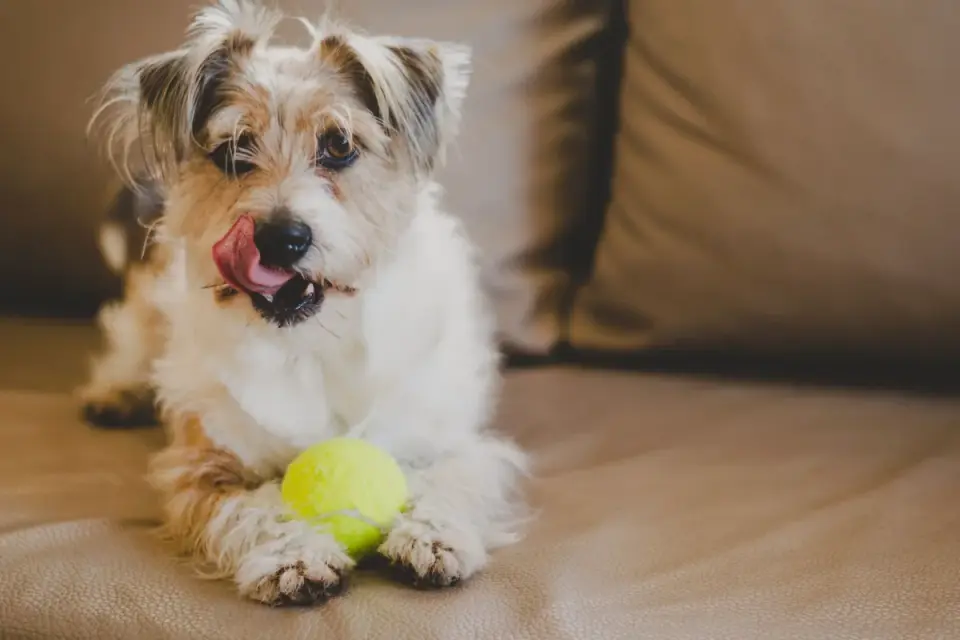
A four-year-old, 18-pound terrier mix showed why guessing worries me. The owner tried a human tea blend with chamomile plus a leftover calming chew from a friend, hoping to cover two restless nights. No label dose for her weight, no ingredient amounts, and the dog spent the night drooling and more restless. Nothing serious happened, but the tradeoff was clear. She lost sleep, the dog lost a predictable bedtime, and we had no way to know what helped or hurt. We stopped both products, kept meals and walks fixed, and added a quiet crate routine instead. Within three weeks in, night waking dropped from three times to zero on most nights.
Contact your veterinarian before any calming supplement, especially if your dog takes behavior drugs, sedatives, blood pressure or heart drugs, or has liver disease, or if anxiety is new, severe, or paired with vomiting, diarrhea, aggression, or self-injury.
The edge case that changes my plan
Not every holiday-anxious dog needs less stimulation. Some need more of the right kind.
A nine-year-old, 64-pound Labrador started trembling when suitcases came out. The owner assumed visitors were the trigger and kept him locked in a back bedroom for quiet. By day 10 of the holiday stretch he was stiffer, more clingy, and worse at night. The surprise was that isolation raised his distress. He was an active, social dog who settled better after a sniff walk and a chew in a corner of the living room, not alone behind a door. We moved his bed to a low-traffic corner, kept his feeding times fixed, and gave him short breaks outside. His evening trembling eased because he could still track his people.
If your dog guards food, bites when cornered, pants for hours, or cannot settle for days, do not push through with training alone. That is a vet visit. Pain, thyroid shifts, cognitive change, and other medical issues can look like anxiety. Heart cases need extra care with supplements, a point I explain in Can Dogs on Heart Medication Also Take CoQ10?.
My three-step check for holiday weeks
Use this order. It takes ten minutes.
- Check body and baseline. Is appetite, thirst, stool, limping, or energy off from normal? New or worsening signs point to a medical check first.
- Lock one anchor. Keep one meal time and one walk or play time fixed within 30 minutes each day. Same bowl spot. Same sleep spot. Tell every guest the plan.
- Lower load, then watch. Give a quiet retreat, white noise, and chew or sniff time. Skip the extra outing or late-night party with the dog if they are already pacing or hiding.
Watch for the sign that should change your next action. If pacing, whining, appetite loss, or hiding fades within 30 to 60 minutes of restoring quiet and routine, stay the course. If it lasts through the next morning, spreads to new triggers, or includes aggression, panic escape, or house-soiling in a house-trained dog, call your veterinarian.
Looking ahead, keep one anchor after guests leave. Dogs rebound faster when January looks like November.
Frequently asked questions
Why is my dog more anxious during the holidays than the rest of the year?
Most dogs react to broken predictability. Later meals, missed walks, overnight guests, travel, and late nights stack up. The behavior often settles when you restore one fixed meal and walk time and a quiet rest spot.
Should I give a calming supplement for holiday stress?
Talk to your veterinarian first. Evidence for chamomile, valerian, L-theanine, and ashwagandha in dogs is limited, and products vary in quality. Routine, sleep, exercise, and a retreat space help more reliably for mild cases.
When should holiday anxiety trigger a vet visit?
Call promptly for aggression, escape attempts, self-injury, persistent panting or pacing, refusal to eat for more than a day, vomiting or diarrhea, or any sudden behavior change in a senior dog or a dog on medication.
Sources
- Chamomile and Valerian Traditional Use Review — Biomedicines
- Ashwagandha Stress and Cognition Systematic Review — Cureus
- L-Theanine Anxiety Meta-Analysis Update — Molecular Psychiatry