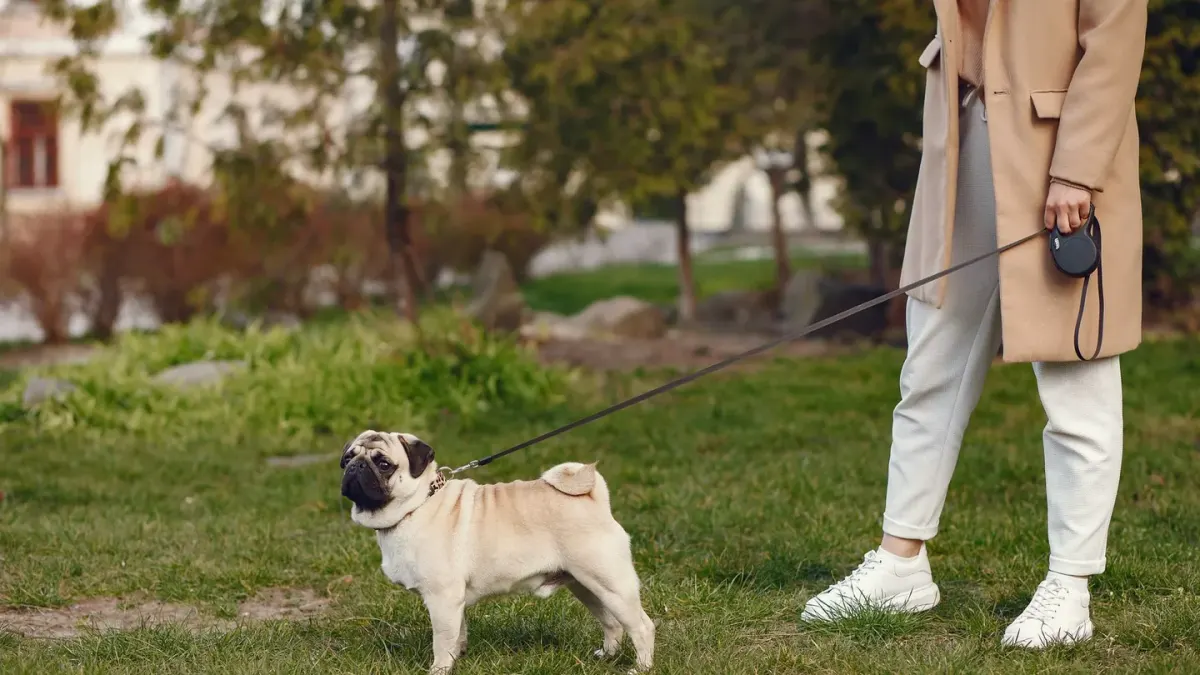
Is it old age, or is it something you can actually name? That’s the disputed premise I want to push on, because “she’s just getting old” is the line I hear most often in exam rooms, and it’s the one that delays real answers.
Here’s the test: does the wobble come on suddenly, over hours, or has it crept in over months? A senior dog who was walking normally at breakfast and can’t stand straight by dinner is telling you something acute happened in her nervous system. A dog who’s been a little slower on stairs for six months, who still walks a straight line but hesitates on the first few steps, is more likely dealing with joint pain or general weakness. Those two pictures point to different problems, and owners often lump them together because both get filed under “she’s old now.”
The sudden picture usually means vestibular disease. According to the American Kennel Club, old dog vestibular disease is one of the most common neurological disorders in veterinary medicine, and it shows up as a head tilt, stumbling, an unusually wide stance, and eyes that flick back and forth. It looks alarming, and it should get a same-day vet call, but it’s often self-limiting: symptoms are typically worst in the first 48 hours and improve substantially within a couple of weeks. That’s a very different conversation than the gradual kind of unsteadiness.
A twelve-year-old Labrador named — well, I won’t name her, but picture a 68-pound dog who’d always taken the stairs two at a time. Her owner called on a Tuesday saying she’d suddenly started leaning left, wouldn’t eat breakfast, and looked seasick every time she tried to stand. That’s the acute picture: hours, not weeks. We got her in same-day, ruled out an ear infection and stroke-mimicking signs, and landed on idiopathic vestibular disease. By day 10 she was walking a mostly straight line again, with a faint head tilt that never fully went away. The lesson wasn’t that she recovered — it’s that the timeline told us what kind of problem we were dealing with before we ever touched her.
The gradual picture is a different animal, and it’s where owners get tripped up trying to fix the wrong thing. If your dog’s back end is what’s unsteady — hind legs crossing, knuckling under, dragging a toenail — and there’s no pain response, that pattern is worth ruling out for degenerative myelopathy, a slow, nonpainful loss of coordination in the hind limbs that typically starts after age 8. VCA Animal Hospitals notes that affected dogs have trouble sensing and placing their feet correctly, which is a different mechanism than arthritis, where the limp usually tracks with pain and gets worse after exercise rather than after standing still. The Merck Veterinary Manual’s overview of spinal column and cord disorders is useful here too, because it lays out how many different problems — disk disease, tumors, degenerative conditions — can all produce that same “wobbly back end” picture, which is exactly why a vet exam matters more than a guess from a hallway video.
I’ll name the strongest counterargument to pushing everyone toward the vet immediately: plenty of senior dogs really are just stiff, arthritic, and cautious, and not every wobble is an emergency. That’s true, and I don’t want owners panicking over a dog who’s simply favoring a sore hip after a long walk. But the cost of guessing wrong runs one direction. An arthritic dog left untreated loses comfort and mobility slowly. A dog with an undiagnosed spinal cord problem or a vestibular event tied to an underlying cause loses time you can’t get back. I’d rather an owner get a “nothing serious, let’s manage the joints” visit than skip the visit and miss something that needed early treatment.
So here’s the three-step check I actually walk owners through on the phone before they even come in. First, timeline: did this happen in hours, or has it built over weeks to months? Second, location: is it the whole body swaying and head tilting, or specifically the back legs giving out? Third, pain response: does she yelp or pull away when you press gently along her spine or hips, or is she wobbly but not painful? Those three answers alone usually tell me whether we’re looking at a vestibular event, a spinal or neurological issue like degenerative myelopathy, or straightforward joint pain — and each of those gets a different plan.
A 9-year-old terrier mix I worked with three weeks ago complicated my usual advice in a useful way. Her owner had already tried a joint supplement for two months because the dog seemed “stiff,” assuming arthritis. It didn’t help, and the stumbling actually got slightly worse — not painful, just less coordinated, mostly in the hind end. That mismatch — a joint-focused fix applied to a coordination problem — is exactly the trap the three-step check is meant to catch. We referred her for a neurologic workup instead of adjusting the supplement dose again.
There’s also an edge case worth flagging: some senior dogs have more than one thing going on at once, and that changes how you apply this. A 14-year-old spaniel I saw had documented arthritis in both hips for two years, but also came in with a new three-day pattern of a head tilt and a mild circling to one side. The temptation is to blame the existing arthritis diagnosis for the new sign, since it’s easier to explain than admitting something new started. It’s worth remembering that a stable, chronic condition doesn’t explain a new, different pattern of instability — if the shape of the wobble changes, treat it as new information, not a flare of the old problem.
Nutrition and cellular-support conversations come up a lot once vestibular or arthritic causes are on the table, and owners are right to ask what actually has evidence behind it versus what’s marketing. If you’re researching ingredients like resveratrol for a senior dog’s joints and vessels, our piece on whether a senior dog needs more resveratrol than an adult dog walks through what the dosing evidence actually supports. If cognitive decline is tangled up with the balance question — some dogs seem “confused” as much as unsteady — see our guide to bacopa monnieri for a senior dog’s memory and focus. And if you’re trying to figure out whether what you’re seeing is early aging or something to flag now, how old a dog has to be before signs of aging typically start is a useful baseline.
Where I land: don’t diagnose the wobble yourself, and don’t wait it out to see if it resolves. Run the three-step check — timeline, location, pain — and call your vet with those three answers ready. That single call, made the same day the picture changes, is worth more than a week of watching and hoping. The sign that should change your next move isn’t how scared you feel; it’s whether the unsteadiness is new, sudden, and specifically in the back end or head — because that’s the pattern that needs a vet visit today, not next week.
Frequently asked questions
Is stumbling in an old dog always an emergency?
Not always, but a sudden change — hours to a day, especially with a head tilt or leaning to one side — should get a same-day vet call. Gradual stiffness that's been building for months is more likely joint-related, but it still deserves an exam to confirm.
How do I tell vestibular disease from degenerative myelopathy at home?
Vestibular disease usually comes on suddenly and involves the head and eyes — head tilt, circling, rapid eye movement. Degenerative myelopathy is gradual, painless, and specific to the hind legs, with crossing or knuckling of the feet. Either way, a vet exam is what actually confirms it.
Can arthritis alone cause a dog to stumble?
Yes, especially on slick floors or after rest, but arthritic dogs typically show pain — favoring a limb, hesitating on stairs — rather than the loss of coordination seen with neurological causes. If there's no pain response and the wobble is affecting balance broadly, ask your vet to rule out a neurological cause too.
Sources
- Vestibular Disease in Dogs: Signs, Symptoms, Treatment — American Kennel Club
- Degenerative Myelopathy in Dogs — VCA Animal Hospitals
- Disorders of the Spinal Column and Cord in Dogs — Merck Veterinary Manual