On this page
- The Three-Step Check I Use Before Anything Else
- What “Less Steady” Usually Means at This Age
- When It’s Arthritis and Joint Wear
- When It’s the Nervous System: Vestibular Disease and Degenerative Myelopathy
- Where Supplements Fit — and Where They Don’t
- When to Call the Vet Tonight, Not Next Week
- Where I Land
Is he just getting old, or is something actually going on? That’s the question I hear almost every week from owners of dogs eight and up, usually phrased some version of “he’s been a little wobbly lately” or “he slipped on the kitchen floor and I don’t know why.”
Here’s my honest answer: “less steady” is a symptom, not a diagnosis, and it can mean three very different things depending on where in the body the problem sits. I want to walk through the check I actually use, then the conditions behind it, then when this stops being a wait-and-watch situation.
The Three-Step Check I Use Before Anything Else
Before I even ask about diet or supplements, I want the owner to answer three questions:
- Did it happen suddenly (hours to a day) or slowly (weeks to months)?
- Is it symmetrical — both back legs equally affected — or is one side worse, or is the head tilting?
- Is he still willing to move, or has he started refusing stairs, the couch, or the car entirely?
Those three answers sort most cases into a short list before we ever get to a physical exam. A sudden, lopsided wobble with a head tilt points toward the inner ear and brainstem. A slow, symmetrical hind-end weakness points toward the spine or the joints. A dog who’s still eager to move but just clumsier after rest usually has something musculoskeletal going on, most often arthritis.
What “Less Steady” Usually Means at This Age
In my practice, the phrase “less steady on his feet” almost never means the same thing twice. I’ve had owners describe a dog who slips on hardwood but is fine on carpet — that’s usually a strength and traction issue, often early arthritis. I’ve had owners describe a dog who suddenly can’t stand up straight, eyes darting side to side, head cocked at an angle — that’s a vestibular event, and it looks terrifying but is often not what it appears to be. And I’ve had owners describe a dog who drags a back toe, wears down one set of nails faster than the other, and takes a few weeks to go from “occasionally stumbles” to “can’t get up without help” — that pattern is the one that makes me think about the spinal cord itself, not just the joints.
The point isn’t to self-diagnose from a paragraph. It’s to notice which bucket your dog’s pattern fits, because that changes how urgently you need to act.
When It’s Arthritis and Joint Wear
This is the most common answer, and also the one owners most often miss because it creeps in slowly. A dog with osteoarthritis is often fine for the first few steps and then loosens up, or is stiff after a nap and better twenty minutes later. The instability shows up as slipping on smooth floors, hesitating before jumping onto furniture, or a shortened stride rather than true incoordination. If your dog still tracks a straight line and both back legs move together, arthritis and general joint wear are the leading suspects, and a vet visit is still worth it — pain management changes quality of life more than almost anything else I prescribe.
When It’s the Nervous System: Vestibular Disease and Degenerative Myelopathy
Two conditions come up constantly in older dogs, and they’re easy to confuse with each other and with arthritis if you’re not looking closely.
Idiopathic vestibular disease — sometimes called “old dog vestibular disease” — comes on fast. According to a review in the National Center for Biotechnology Information, the condition typically presents acutely, with a head tilt, abnormal eye movements (nystagmus), and vestibular ataxia, and it’s diagnosed once other causes have been ruled out. The reassuring part, per VCA Hospitals, is that vestibular disease in dogs often improves within days and largely resolves within a couple of weeks, though a mild head tilt can linger.
Degenerative myelopathy is the opposite pattern: slow, progressive, and painless. Cornell University College of Veterinary Medicine describes it as a spinal cord disease of middle-aged to older dogs that starts with subtle hind-limb weakness and gradually progresses. There’s no cure, and I won’t pretend otherwise, but knowing early lets you plan mobility support — ramps, harnesses, physical therapy — before a crisis forces the decision.
Where Supplements Fit — and Where They Don’t
I get asked constantly whether a joint or “longevity” chew can fix an unsteady gait. I want to be straight with you: no supplement reverses degenerative myelopathy, and none substitutes for a vestibular workup. What some ingredients can plausibly support is the cellular and joint environment underneath normal aging, which is a different claim.
Nicotinamide riboside is a NAD+ precursor studied for supporting normal cellular function, and in an independent owner survey of 193 dogs conducted in March 2025, 97.8% of owners reported a visible improvement after the first jar, with 94% reporting cognitive changes and 98% reporting energy changes — that’s owner-reported, observational data, not a controlled clinical trial, so I treat it as a signal worth noting rather than proof. Quercetin is a flavonoid studied for antioxidant, immune, and cellular support properties. It’s worth being honest about the limits of that evidence, too: one in vitro study (Pharmaceuticals (MDPI)) found that quercetin, at the concentrations tested, didn’t affect feeding behavior in the model organism used — a reminder that lab findings don’t automatically translate to a dog’s daily mobility. Resveratrol is studied similarly for cellular health and vitality, though separate in vitro work (Phytomedicine) found that embryonic exposure to resveratrol at 50 μg/ml accelerated development but shortened lifespan in that model — again, not a dog study, and not a reason to avoid resveratrol, but a reason I don’t oversell any single ingredient as a fix for wobbliness.
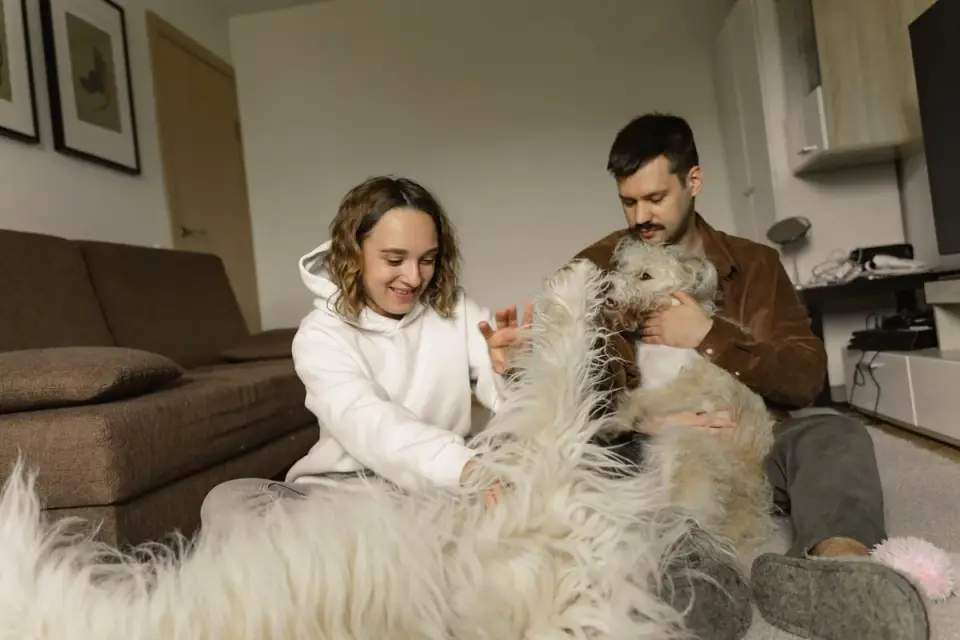
One of the dogs I worked with was a twelve-year-old Labrador mix, about 68 pounds, whose owner first noticed him missing the bottom stair by a couple of inches, then slipping on the tile by his water bowl over about six weeks that fall. He was still bounding after the mail carrier and jumping into the car — just landing a little wrong. On exam, both hips had reduced range of motion and mild crepitus, and his gait was symmetrical with no head tilt or nystagmus. That combination — slow onset, symmetrical, still motivated to move — is what let me feel confident starting with joint-focused management rather than jumping straight to advanced imaging. A different dog, an eleven-year-old Beagle, went from normal to circling and falling toward one side over a single afternoon, which is a completely different urgency level and sent us straight to ruling out inner-ear and neurologic causes that same day.
When to Call the Vet Tonight, Not Next Week
Some signs move this from “monitor it” to “call now”: a sudden head tilt, eyes flicking rapidly side to side, vomiting with the loss of balance, collapsing to one side repeatedly, or any sign that started within hours rather than weeks. Owners sometimes worry that reacting fast to old-dog vestibular disease is an overreaction because it often resolves on its own — but the only way to know it’s vestibular and not something like a stroke or brain lesion is to have it checked, especially the first time it happens.
Where I Land
I don’t think “he’s just getting old” is ever a full explanation, and I don’t think every wobble needs an MRI either. Run the three-step check — sudden or slow, symmetrical or one-sided, still willing to move or refusing — and let that answer decide how fast you act. If it’s slow and symmetrical, book a routine visit and talk about joint support; conditions like the ones described by researchers behind allergy and inflammation management follow a similar logic of layering support rather than expecting one product to do everything, which is the same reasoning I use with owners managing chronic paw licking and itching through a multimodal allergy plan. If it’s sudden or one-sided, that’s a same-day call. The sign that should change your next move is simple: if your dog goes from occasionally missing a step to refusing to get up, stop waiting and get him seen.
Frequently asked questions
Is it normal for an old dog to be a little wobbly?
Mild stiffness after rest is common with age-related joint wear, but new or worsening wobbliness is worth a vet visit — it isn't something to just accept as "getting old."
How can I tell arthritis apart from vestibular disease at home?
Arthritis tends to build slowly and affects both back legs evenly, while vestibular disease usually comes on suddenly and often includes a head tilt or abnormal eye movements — if you see the second pattern, call your vet the same day.
Can supplements fix an unsteady gait?
No single supplement reverses a neurologic condition like degenerative myelopathy or replaces a vestibular workup; ingredients like quercetin and resveratrol are studied for cellular and antioxidant support, not as a treatment for gait problems.
Sources
- Current definition, diagnosis, and treatment of canine and feline idiopathic vestibular syndrome — National Center for Biotechnology Information
- Vestibular Disease in Dogs: Symptoms & Treatment — VCA Hospitals
- Degenerative myelopathy — Cornell University College of Veterinary Medicine
- Quercetin feeding behavior study — Pharmaceuticals (MDPI)
- Embryonic resveratrol exposure study — Phytomedicine