Can your dog see what color you are? They mostly read movement and scent, not shirt color.
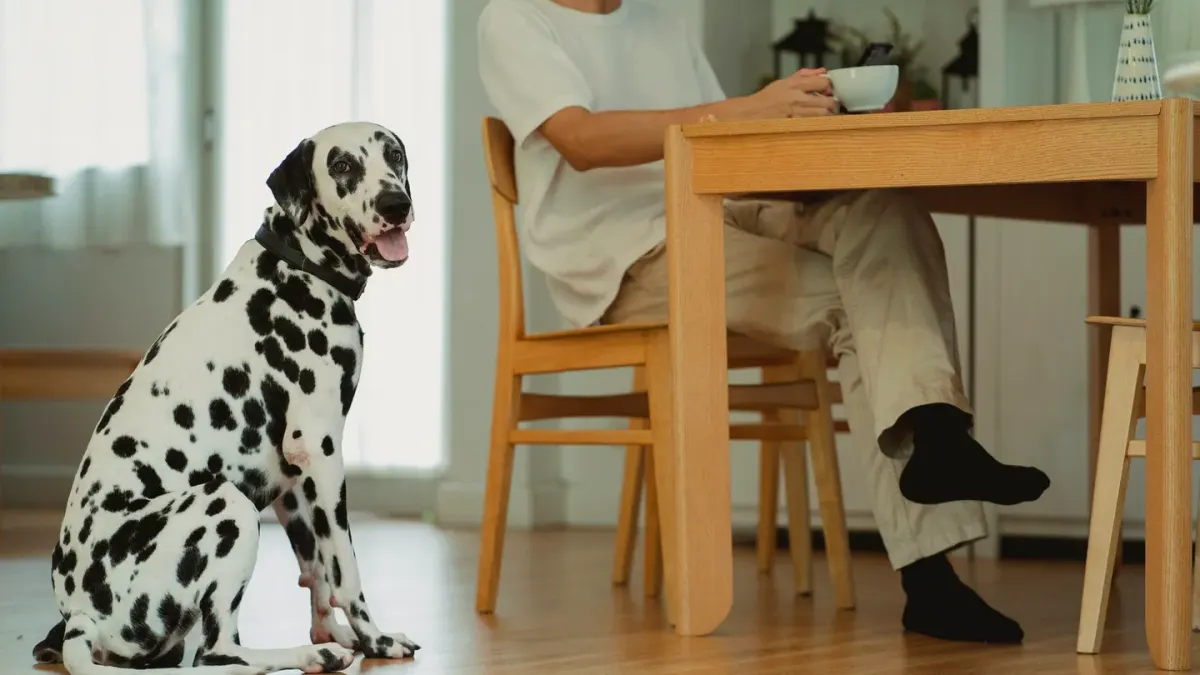
Can your dog see what color you are? Not the way you see color.
Dogs have dichromatic vision. They have two cone types in the retina, tuned roughly to blue and yellow wavelengths, while people have three cone types for red, green, and blue. That difference narrows the palette your dog can separate.
The classic work on this is Visual Neuroscience and its paper on color vision in the dog. Dogs distinguished blue from yellow and gray reliably, but confused reds, oranges, and greens that look distinct to us. Your red shirt, green jacket, or brown pants likely read as a similar yellowish-gray or dark shade.
Brightness and movement fill the gap. Dogs are sensitive to light-dark contrast, motion at a distance, and low-light vision because of a higher proportion of rods and a reflective tapetum. VCA Hospitals summarizes this owner-relevant point well: dogs see blues and yellows best, see fewer fine details than people, and detect movement readily.
That explains the common mix-up at the dog park. Your dog does not pick you out by shirt color. They use your walk pattern, posture, voice, and scent, plus learned location cues.

What your clothes look like to your dog
Think in contrast, not color names.
A bright yellow raincoat stands out against a gray-green field. A red T-shirt against green grass does not. Both may look like a medium-dark patch to a dog, with the outline and motion doing the work.
Blue toys, yellow training dummies, and white cloths are easier for most dogs to track. Red and orange fetch toys on green grass are the hardest combination, even for a motivated dog.
Kelsey noticed this with Lemmy, a 9-year-old neutered male Beagle from Elk Grove, California. Lemmy kept running past an orange ball in tall grass during a 20-minute fetch session, then found a yellow ball in three retrieves. The choice being weighed was toy color, and the observable change was search time, not interest.
My three-step check when color seems to be the problem
I translate this worry into the same short check I give for most vision questions.
1. Change contrast, not just color
Hold the object against its usual background. If your dog finds a blue or yellow toy faster than a red one on grass, vision is likely normal and color confusion was the barrier.
2. Test the other senses separately
Stand still and quiet at 15 feet, then call once. Most dogs orient faster to voice and movement than to any clothing change. No response to sound, touch cues, or a waved high-contrast toy deserves more attention than shirt color.
3. Watch for a vision change, not a color preference
Contact a veterinarian promptly for sudden bumping into furniture, reluctance on stairs in dim light, cloudy eyes, unequal pupils, squinting, discharge, or a rapid change in navigation. Those signs point to pain, lens, retinal, or neurologic disease rather than normal dichromatic vision.
This is where my position is firm. Train and manage with contrast, motion, and scent. Do not buy color-based training aids that promise human-like color recognition.
What would change my mind is controlled evidence that dogs use a third cone channel under daylight conditions. Current anatomy, electroretinography, and behavioral testing do not support it.
For senior-dog context, normal aging can also reduce night navigation and focus. Readers following brain aging may find related explainers on How to Keep an Aging Dog’s Brain Active and Engaged and How Old Does a Dog Have to Be Before Signs of Aging Typically Start? useful for separating vision loss from cognitive change.
If Lemmy’s pattern sounds familiar, switch to one blue and one yellow toy for two weeks. Keep distance, light, and grass length similar.
Dogs read you clearly. They just read shape, movement, and smell first.
Frequently asked questions
Can my dog recognize me by the color of my clothes?
Unlikely. Dogs recognize people by scent, voice, gait, and outline. A new coat color alone rarely changes recognition.
What colors can dogs see best?
Blues and yellows. Reds, oranges, and greens often look like similar yellow-gray or brown-gray shades, so use blue or yellow toys for visibility.
Sources
- Color vision in the dog — Visual Neuroscience