
On this page
Is your dog supposed to stay this still after knee surgery. Yes, for weeks, and that stillness is doing real work.
Here is the checklist I give owners on discharge day. Tape it to the crate.
- Crate unless leashed for potty or prescribed rehab, for 8 to 12 weeks or as your surgeon directed
- Potty on a short leash with a sling or towel under the belly, no yard wandering, no stairs, no jumping on furniture
- Non-slip flooring between crate and door, crate large enough to stand and turn but not to pace or play
- Ice, medications, and wound checks exactly as written, with an e-collar on until sutures are out
- Brief mental work in the crate, frozen Kongs, snuffle mats, calm training, to prevent restlessness
- Leash walk minutes increase only after rechecks, never because the dog looks better
That list looks strict because the repair is vulnerable early. The American College of Veterinary Surgeons explains that cranial cruciate ligament disease leads to instability and arthritis, and surgical stabilization needs protected healing before activity resumes.
A 6-year-old, 78-pound Labrador taught me how concrete this gets. He came home three days after a TPLO, bright and hungry, and his owner wanted to let him sleep on his usual couch spot because the crate felt cruel. By day 4 the incision was puffy from too many short trips to follow the family around. We reset to true crate rest with leashed potty breaks only, a rug runner to the back door, and meals delivered in the crate. By day 10 the swelling had settled and he was toe-touching calmly on leash, which was the marker that changed our plan from damage control back to scheduled healing.
Why the first 8 weeks decide the outcome
Bone healing after TPLO takes weeks, not days. Soft tissues calm down, the osteotomy knits, and muscle returns slowly. Too much load too soon risks implant loosening, swelling, meniscal injury, or a second cruciate tear on the other side from compensating.
VCA Hospitals notes that postoperative restriction, controlled leash exercise, and staged rehabilitation are central to recovery after cruciate rupture, with return to full activity taking several months for many dogs.
Keep the rule simple. If it is not a potty trip or a surgeon-approved exercise, the dog is in the crate or a small gated pen. Short, calm leash walks replace freedom.
One short paragraph matters here. Energy is not healing.
Set up the crate so rest actually happens
Place the crate in a lived-in room where the dog can see you without following you. Use a firm orthopedic pad with a washable cover, a spill-proof water bowl that clips to the side, and a white noise machine if household noise triggers barking and lunging.
Cover three sides with a light blanket to reduce visual arousal. Keep chews safe and supervised. Remove anything the incision can catch on.
For traction, lay yoga mats or runners from crate to outside door. Most slips I hear about happen on kitchen tile during a midnight potty break, not on a walk.
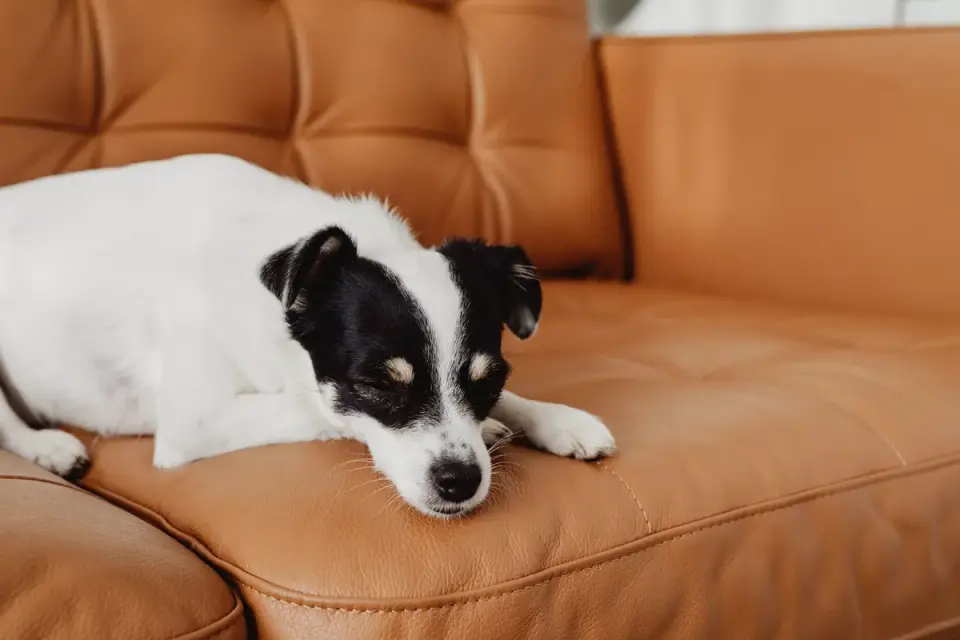
Potty, stairs, and the sling walk
Use a 4 to 6 foot leash every time. Support large dogs with a belly sling or folded bath towel for the first 10 to 14 days, especially on steps. Block stairs with gates. Carry small dogs up and down.
No dog parks, no off-leash greetings, no fetch in the hallway. A single sprint after a squirrel at three weeks in can undo a month of quiet healing.
A 4-year-old, 52-pound pit bull mix showed the tradeoff clearly. Her owner followed crate rest perfectly for two weeks, then skipped the sling because she was walking well and tried one unsupervised yard trip. She chased a ball the neighbor tossed over the fence, came up suddenly non-weight-bearing again, and needed an emergency recheck and two extra weeks of strict confinement. The failed approach was trusting a good-looking gait too early. Calm on leash at week two reflects pain control and early stability, not a healed osteotomy, and that distinction is what keeps owners from advancing exercise on their own timeline.
Call your veterinarian promptly for fever, pale gums, uncontrolled pain, foul-smelling discharge, wound opening, sudden loss of leg use after improvement, or chewing that will not stop with an e-collar adjustment.
What rechecks and rehab usually look like
Expect suture removal around 10 to 14 days and radiographs around 8 weeks to assess bone healing, with timing adjusted by your surgeon. Physical rehabilitation often starts with passive range of motion, icing, and short controlled walks, then adds poles, inclines, and underwater treadmill only when cleared.
Do not add joint supplements, NSAIDs, or new pain aids without your surgeon. Nutrition matters, but rest and staged loading drive the outcome. When owners ask about long-term joint support ingredients, I keep the language narrow to what studies actually say. Glucosamine and chondroitin are among the most studied joint support ingredients for dogs, and research reports that chondroitin “supports healthy synovial fluid homeostasis” in work published in Frontiers in Veterinary Science. Separate laboratory work found that glucosamine “prevent experimentally induced cartilage degradation in vitro” according to the Journal of Veterinary Medical Science, and a rodent study of marine oils reported that “BMO, GMO, and KO all alleviated paw swelling in rats and reduced serum levels of rheumatoid factor (RF), anti-cyclic citrullinated peptide (anti-CCP) antibody, and pro-inflammatory cytokines such as TNF-α and IL-17” in Nutrients. Those findings do not replace confinement, weight control, or rehab.
Weight control deserves attention during rest. Measure meals, limit high-calorie chews, and ask your vet about a recovery feeding plan. Extra pounds load both knees. For background on age-related tissue change, owners often find How Collagen Production Changes as Dogs Age useful context, and low daytime activity can overlap with sleepiness covered in Why a Dog Seems Foggy or Groggy After Naps Lately.
An edge case changed how I counsel multi-dog homes. A 9-year-old, 34-pound beagle mix lived with two young dogs and panicked in a closed crate by night three, panting and pawing until her incision bled at one staple. Total isolation was backfiring. With surgeon approval we switched to a small exercise pen beside the owner’s bed, kept the other dogs behind a separate gate, used a snug recovery suit under the e-collar, and added three short crate-feeding sessions daily to rebuild the association. By week five she was resting quietly for stretches and walking to potty without vocalizing. Confinement still mattered, but the shape of confinement had to fit an anxious senior in a busy house.
My three-step check for every crate rest week
One, look at the leg. Mild bruising early is common. Increasing heat, swelling after improvement, drainage, odor, or a leg that was improving and suddenly will not bear weight means contact your veterinarian that day.
Two, look at behavior. Eating, drinking, urinating, defecating, and resting between potty breaks point toward steady recovery. Whining that is new, panting at rest, hiding, or refusal to move can signal pain or complication.
Three, look at the plan. Are walks still short and leashed. Is the e-collar still on. Did you get clearance before adding time or stairs. If the answer is no, step back to the last approved level and message the surgical team.
I land here. Strict crate rest feels excessive until you see how many setbacks come from freedom given a week too early. Keep the dog quiet, keep walks boring, keep rechecks, and let radiographs and exam findings earn each next step.
Watch for the sign that should change your next action. Calm toe-touching progressing to consistent weight bearing on leash is reassuring. Sudden regression, wound change, or pain that breaks through medication is not wait-and-see. That is a call.
Frequently asked questions
How long does crate rest last after TPLO surgery?
Many surgeons prescribe 8 to 12 weeks of confinement with staged leash walks, with radiographs around 8 weeks to confirm bone healing. Follow your surgeon's written timeline and do not advance exercise because the dog looks better.
Can my dog sleep outside the crate during recovery?
Use the crate or a small pen for all unsupervised time until cleared. Brief supervised couch time risks jumping down and twisting the repair, especially in the first month.
What level of limping is normal after ACL surgery?
Gradual improvement with toe-touching progressing to consistent weight bearing is expected. Sudden worsening after improvement, non-weight-bearing beyond the first few days, or swelling with discharge warrants a same-day veterinary call.
Sources
- Cranial Cruciate Ligament Disease in Dogs — American College of Veterinary Surgeons
- Synovial Homeostasis Study — Frontiers in Veterinary Science
- Cartilage Degradation In Vitro Study — Journal of Veterinary Medical Science
- Marine Oils and Paw Swelling in Rats — Nutrients