To say hi in dog language, stay sideways and calm and let the dog choose to approach.
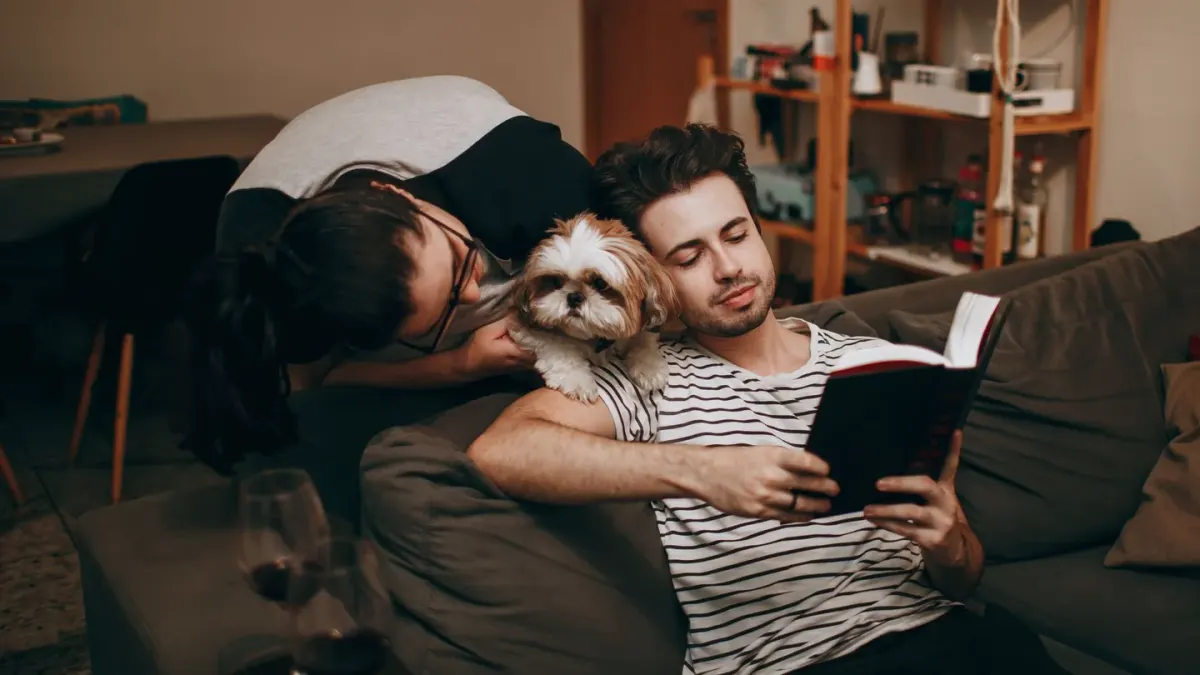
Want to say hi in dog language? Think small and sideways, not big and face-on.
Most greetings dogs trust look almost boring to us. No staring. No walking straight at them. No hand over the head. Just a relaxed side angle, soft eyes, and space for the dog to decide.
How dogs greet each other when we let them
Dogs greet with curves. They arc around each other, sniff briefly, then move away. A loose body, blinking eyes, and a head turned slightly away all signal friendly intent.
You can copy that shape. Stand a little sideways to the dog. Keep shoulders relaxed and hands low at your sides. Glance, then look away. Wait three seconds and watch what the dog does.
A dog that wants contact will lean in, stay soft nearby, or nudge gently. A dog that licks lips, yawns, turns away, tucks the tail, or freezes is asking for more space. Believe that answer. That low-pressure approach lines up with low-stress handling guidance from the American Veterinary Society of Animal Behavior.
Try this low-pressure hello instead
Use these three steps at the park, at a friend’s house, or on a walk.
First, ask and pause. Ask the owner if you can greet, then stop about six feet away. Turn slightly sideways rather than looming over the dog. Keep your voice low and quiet.
Second, invite without reaching. Keep your shoulder angled away and hold a loose hand low by your thigh. Let the dog step forward to sniff. Keep petting short, two or three seconds on the chest or side, not on top of the head.
Third, stop and see. Pull your hand back and wait. If the dog moves closer or nudges you, greet a little longer. If the dog moves away, shakes off, or sniffs the ground, you are done. Giving that choice builds trust.
Keep it even shorter with older dogs. Stiff joints and cloudy senses can make close contact uncomfortable, and signs of aging often start subtly. If you live with a senior, my piece on How Old Does a Dog Have to Be Before Signs of Aging Typically Start? can help you spot them, and How to Keep an Aging Dog’s Brain Active and Engaged has low-pressure ways to connect without crowding.
Three mistakes that make greetings harder
We mean well. The dog reads pressure.
Walking straight on, leaning over, staring into the eyes, and reaching over the head all look confrontational in dog language. Hugging, holding the face, and following for one more pat do the same. Many growls and snaps happen after a dog has already whispered no with stillness or turning away.
Coach children to stand like a tree beside you, hands folded, and let the dog pass. Contact a veterinarian or a qualified behavior professional promptly if a dog regularly freezes, growls, hides, or snaps during greetings. That pattern means home strategies are not enough.
Jacky, a 3-year-old spayed female Shih Tzu from Huntsville, is a good example. Her owner Cory said every visitor bent over her to pat her head. Jacky started turning away and hiding behind chairs. They switched to sideways greetings with no reaching, brief chest scratches, then a pause. Within a week Jacky began approaching guests on her own.
The polite hello stays simple. Stay small, stay sideways, and let the dog say hi back.
Sources
- Position Statements — American Veterinary Society of Animal Behavior