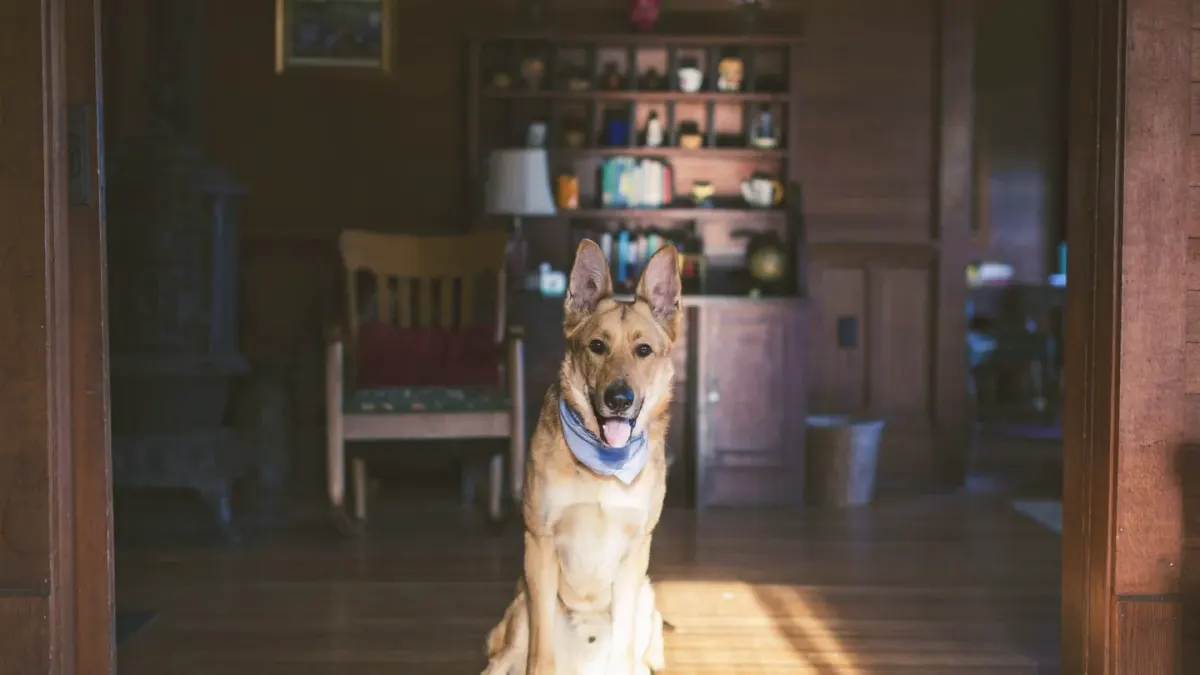
Is your senior dog restless after dark while the rest of the house is trying to sleep. That question comes up often on the clinic floor, and my disputed premise is simple. Most nighttime waking in older dogs is not stubborn behavior. It is a mix of discomfort, anxiety, and fading routine that responds to the same order of cues every night.
Milo is a composite I think about here, a 13-year-old, 68-pound Labrador mix who started pacing the hallway around 11 p.m. His owner said days were mostly fine, with slow walks and long naps, but three weeks in the nights had changed. He would stand, pant softly, drink, ask out, then ask back in. She worried about canine cognitive change, and about pain she could not see. She wanted something natural to help him settle, and she wanted to know what to do in what order.
My answer starts before any supplement. Pain, urinary urgency, heat or cold sensitivity, and vision loss change sleep more than most owners expect. If you want context on age change, read How to Tell Your Dog Is Entering Its Senior Years and Why a Senior Dog Seems More Sensitive to Heat or Cold Now. Contact a veterinarian promptly for new nighttime panting, crying, house soiling, stumbling, or a sharp change in thirst, appetite, or breathing.
Set the same order every night
Senior dogs settle better when the sequence never changes. Keep dinner, last potty break, and bedtime within the same 30-minute window. Feed dinner at least two to three hours before bed so digestion does not drive a midnight outing. Then do a short sniff walk, not exercise. Five to ten slow minutes is enough for many stiff seniors.
Keep lights low after that walk. Same bed, same spot, same blanket. White noise can help if the house creaks or a younger dog moves around. I ask owners to watch one marker for a week. Time from lights-out to lying down with head down. That number tells you if the routine is working.
A second owner I remember tried the opposite path, a 9-year-old, 24-pound terrier mix who whined from 1 to 3 a.m. The family added a long evening fetch session to tire her out, then a late large meal by day 10. It backfired. She was sorer, thirstier, and needed out twice. By day 10 the marker had moved from 20 minutes to over an hour of circling. The tradeoff was clear. More evening stimulation looked like better sleep, but joint soreness and a full bladder made settling harder. We cut the late meal, moved play to late afternoon, and kept nights quiet and boring.
What the calming-ingredient evidence actually lets me say
Owners often ask about chamomile, ashwagandha, or L-theanine at bedtime. I keep expectations narrow and tied to what is published. For chamomile in animals beyond the best-studied uses, one broad herbal review notes, “For the remaining species, evidence is derived mainly from preclinical studies or traditional use.” That context comes from Biomedicines, which keeps me from promising a drug-like sleep effect in dogs.
For ashwagandha, human data are more direct but still limited for dogs. As summarized in Cureus, “A systematic review analyzed multiple RCTs and concluded that ashwagandha has a moderate positive impact on stress reduction and cognitive performance.” That is a human-centered evidence tier, not a canine sleep dose, and I do not transfer human doses to a senior dog.
For L-theanine, the recent psychiatric review is similarly cautious, noting for anxiety subtypes “except for one study on psychotic anxiety (SMD = 0.54; 400 mg/day for 8 weeks)” in Molecular Psychiatry. The takeaway is steady. These ingredients are studied for calm and stress, not proven as senior-dog sedatives, and any evening product needs a veterinarian to check interactions, liver and kidney disease, and other behavior drugs.
My three-step check before you add anything
Translate the worry into this order.
- Body first. Check pain, teeth, nails, skin itch, and that bed. Can the dog step onto it without slipping. Is the room warm enough but not hot. Add a non-slip rug path to water and the door.
- Pattern next. Log three nights. Bedtime, wake times, panting or pacing, potty trips, and morning stiffness. Bring that log to the visit. It changes the plan faster than any single story.
- Brain and bladder last. Ask about cognition, vision, hearing, and urinary infection. Many seniors wake because they are unsure where they are or because they truly need to urinate. Night lights, a consistent scent cue on the bed, and a scheduled late potty break help both.
If the log shows sudden house soiling, falling, head tilt, or Why a Senior Dog Is Stumbling or Losing Her Balance matches what you see, contact a veterinarian that day rather than adjusting the routine.
An edge case changed how I phrase this. A 15-year-old, 41-pound shepherd mix slept well until the family moved his bed to a quiet laundry room to reduce noise. He then barked at midnight for four nights straight. He was not in more pain. He had lost his anchor sounds. His hearing and vision were reduced, and total quiet felt unsafe. We moved the bed back near the bedroom door, added a low fan, and kept a dim hallway light on. By the third night back, time to head-down fell from 55 minutes to under 15. Some seniors need less stimulation. Some need the familiar hum to stay oriented.
Where I land
Keep nights short, dim, and repeatable. Move food and hard play earlier. Make pain and potty needs easy to meet. Use calming ingredients only as a veterinarian-guided support for relaxation, not as a fix for pain, infection, or cognitive change.
Watch the one sign that should change your next action. If time to head-down shortens over seven nights, stay the course. If pacing, panting, or waking rises despite a steady routine, book the veterinary visit.
Frequently asked questions
What time should a senior dog go to bed?
Pick a time you can keep within 30 minutes nightly, with dinner two to three hours earlier and a brief potty walk right before bed. Track time to head-down for seven nights to see if the pattern improves.
Should I play with my senior dog late to tire him out?
Move harder play to late afternoon. Keep the last hour slow, dim, and predictable, since late exertion and late large meals often increase soreness, thirst, and midnight potty trips.
When is nighttime restlessness a vet visit, not a routine problem?
Contact a veterinarian promptly for new panting, crying, house soiling, stumbling, heavy thirst, appetite change, or labored breathing, and bring a three-night log of bedtime, wakes, and potty trips.
Sources
- Traditional herbal care for relaxation across species — Biomedicines
- Ashwagandha, stress, and cognition systematic review — Cureus
- L-theanine and anxiety subtypes evidence review — Molecular Psychiatry