Worried about THC for your dog? Here is what to check before you buy any calming oil.
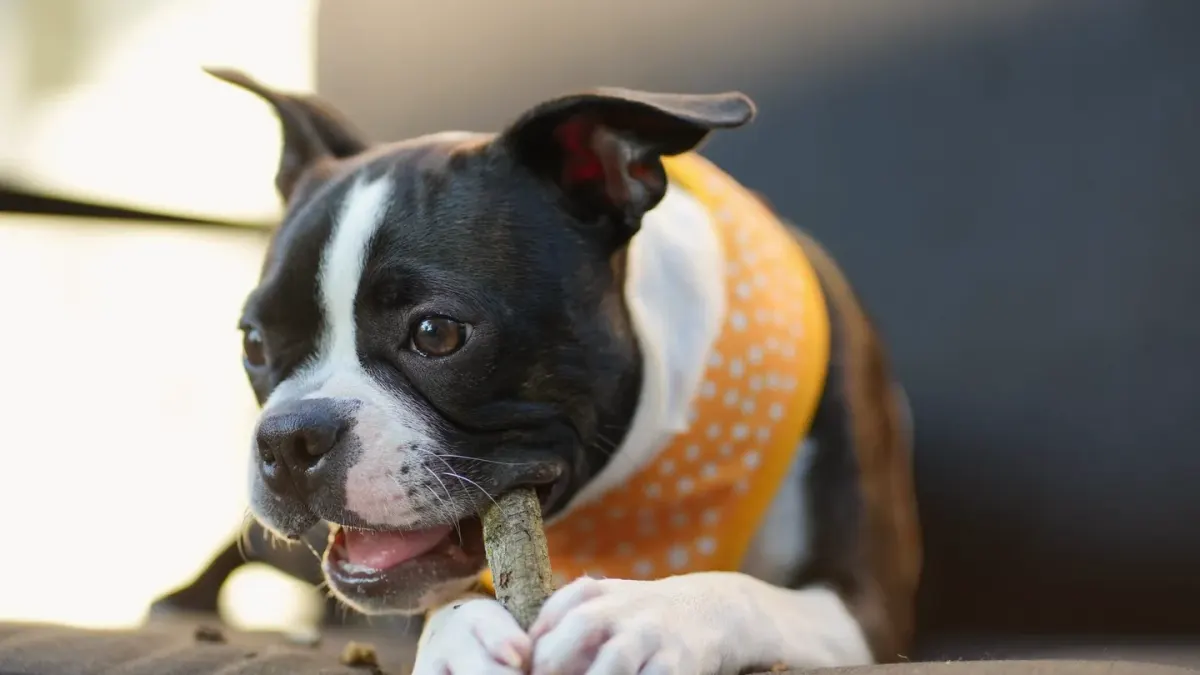
Does THC-free mean worry-free for a dog? I do not treat those words as a safety guarantee.
A label can say THC-free and still leave you guessing about hemp extract strength, carrier oil, third-party testing, and whether calming ingredients were added for flavor or for effect. My job in the exam room is to turn that worry into a clear check you can do at the kitchen counter.
The owner of a 9-year-old, 62-pound Lab mix came in last spring because thunderstorms had turned into pacing, panting, and scratching at the back door from midnight to 2 a.m. She had already tossed one bottle that smelled strongly of hemp and bought a second bottle labeled THC-free, broad spectrum, with chamomile on the front. She asked if the second bottle was automatically the safe one. We did not open it and dose from it. We read the certificate of analysis together, checked her dog’s arthritis medication list, and talked about what rest actually looked like on storm nights by day 10 of any new routine.
That pause matters because the calming literature is thinner than marketing suggests.
What THC-free actually tells you — and what it leaves out
THC-free usually means the maker intended to remove delta-9 THC or use an isolate or broad-spectrum extract. It does not tell you batch THC level, CBD milligrams per milliliter, solvents, heavy metals, or pesticides.
Look for a lot-matched certificate of analysis from an independent lab, not just a QR code to a general example. Check the exact product, lot number, CBD content, THC result listed as non-detected with a stated limit, and contaminant panels.

Label language matters more than front-of-bottle promises.
For other calming herbs, the reviews remind me to stay modest. One summary notes: “For the remaining species, evidence is derived mainly from preclinical studies or traditional use.” I read that in the MDPI review, and I apply the same caution to hemp claims for dogs. Traditional use plus a few early studies is not the same as proven calm in your living room.
Why I still check the other calming ingredients first
Many THC-free oils blend in botanicals. I read those panels as carefully as the hemp panel.
Chamomile and Valerian Root have been used in traditional herbal care to support relaxation. That sentence fits history, not proof of effect for thunderstorm pacing. A systematic review of ashwagandha found: “A systematic review analyzed multiple RCTs and concluded that ashwagandha has a moderate positive impact on stress reduction and cognitive performance.” I found that wording in the Cureus review, and it describes people, not dogs on joint or heart drugs. For L-theanine, one estimate reported was “except for one study on psychotic anxiety (SMD = 0.54; 400 mg/day for 8 weeks)” from the Nature Portfolio review, which is a human dose and timeline I would never copy directly to a dog.
A 4-year-old, 18-pound terrier mix shows why blends complicate things. His owner bought a THC-free oil with added calming herbs after a boarding stay went badly, then doubled the drops after three weeks in when barking at visitors did not change. By week four he was sleepy in the mornings but still reactive at the door, and the owner could not tell whether hemp, chamomile, lack of sleep, or the higher volume caused the morning slump. We stopped the guesswork, returned to the starting amount on the label, kept one change at a time, and logged door behavior and morning energy separately.
One ingredient change at a time is how you learn anything.
My three-step check before any THC-free bottle goes home
This is the check I use when an owner brings a bottle or a link.
- Verify the bottle. Match product name and lot to the lab report. Confirm non-detected THC with a stated detection limit, actual CBD mg per mL, carrier oil, and contaminant testing. No lot-matched report means no purchase.
- Screen the dog, not just the worry. List age, weight, liver disease, pregnancy, and every prescription, including heart and seizure drugs. Older dogs and dogs on multiple drugs need a veterinarian call first, the same way I advise owners asking Can Dogs on Heart Medication Also Take CoQ10? or wondering How Old Does a Dog Have to Be Before Signs of Aging Typically Start? to bring a full medication list.
- Define calm you can see. Pick one behavior, such as minutes of pacing after a trigger, ability to settle on a mat, or nighttime wake-ups. Track it for 7 to 14 days with the same feeding, walk, and bedtime pattern. If you cannot measure it, you cannot judge the oil.
Contact your veterinarian before starting if your dog takes prescription behavior, seizure, liver, or heart medication, has liver or kidney disease, is under 6 months old, or if anxiety includes aggression, self-injury, or refusal to eat.
An 11-year-old, 74-pound shepherd mix with stiff hips gave me the edge case I now warn about. His owner wanted a THC-free oil for evening restlessness and assumed an oil would be gentler than a chew because it looked pure. On review, the oil had no contaminant panel and the dropper markings rubbed off, so every dose was a guess. We set the oil aside, kept his evening walk, orthopedic bed, and pain plan unchanged, and agreed to revisit only a product with clear mg per mL, a readable dropper or measured syringe, and a full lab report. Purity on the front did not fix measurability at home.
If pacing, trembling, drooling, vomiting, wobbliness, extreme sleepiness, or appetite loss appears or worsens after starting any hemp product, stop it and call your veterinarian that day.
My strongest counterargument is simple: some owners say a THC-free oil worked when nothing else did, so why demand paperwork. I respect that experience, and I still land on verification first because dogs cannot report subtle side effects and owners cannot judge strength without numbers.
Watch for settled breathing, loosened body posture, and return to a normal meal within an hour after a trigger. If those signs do not improve after two weeks of consistent tracking, or if daytime sleepiness replaces nighttime pacing, that change should reset your plan and prompt a veterinary visit.
Frequently asked questions
Does THC-free mean a CBD oil has zero THC for my dog?
No. It usually means THC was not detected at the lab's stated limit. Ask for a lot-matched report that names the product, lot, CBD mg per mL, THC result with detection limit, and contaminant testing.
What should I track after starting a THC-free oil?
Track one observable behavior for 7 to 14 days, such as minutes of pacing, mat settling, or nighttime wake-ups. Keep feeding, walks, and bedtime steady and log morning energy separately.
When should I call my vet instead of adjusting the dose?
Call before starting if your dog takes heart, seizure, liver, or behavior medication, has liver or kidney disease, shows aggression or self-injury, or if vomiting, wobbliness, extreme sleepiness, or appetite loss appears.
Sources
- Chamomile evidence review in dogs and other species — MDPI
- Ashwagandha stress and cognition systematic review — Cureus
- L-theanine anxiety meta-analysis — Nature Portfolio