The main types of service dogs are guide, hearing, mobility, medical-alert, psychiatric, and autism dogs, defined by trained tasks.
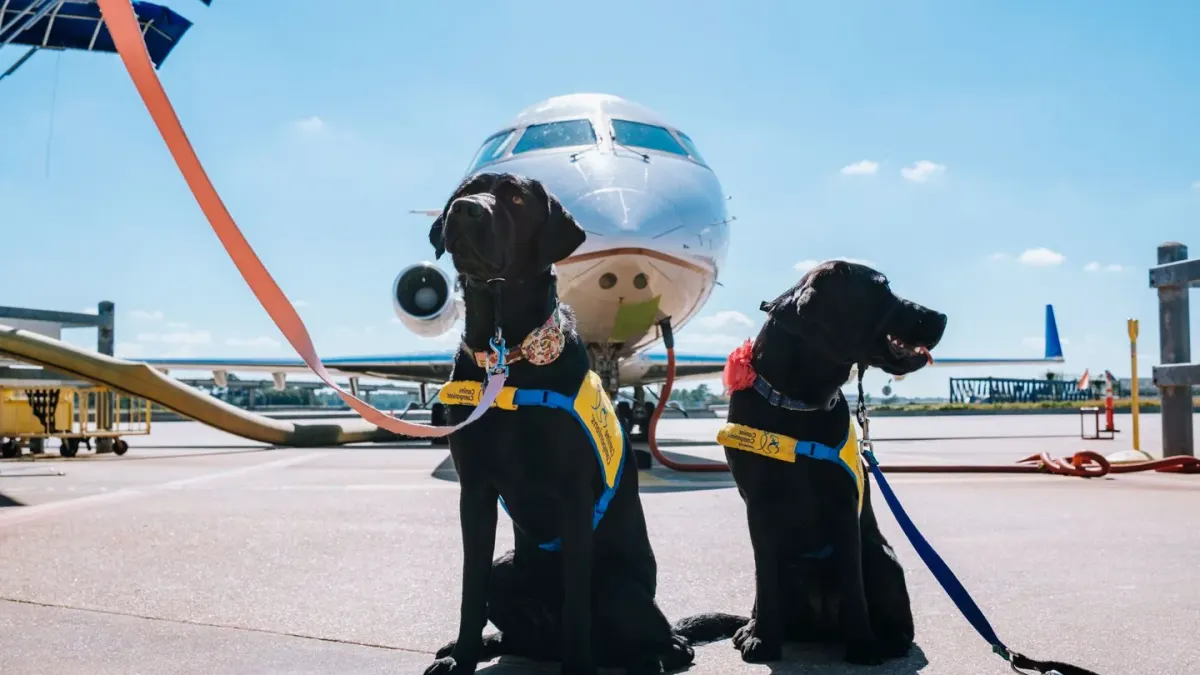
Do you wonder which kind of service dog you just walked past? Look at the task, not the vest. A service dog is a dog trained to perform specific work for one person with a disability.
That definition matters. Under federal public-access rules described by the U.S. Department of Justice, comfort alone does not count. The dog must do trained tasks tied to the handler’s disability. That is also why categories overlap a little by task, not by breed.
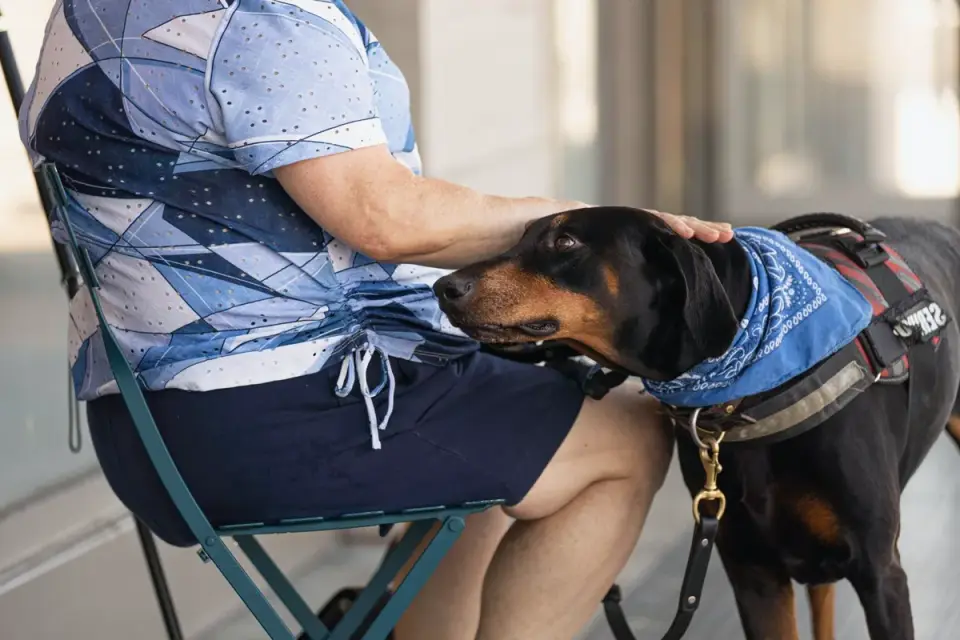
Guide dogs for vision loss
Can the dog lead safely around obstacles? Guide dogs do that work. They stop at curbs and stairs, avoid overhead branches, find doors and seats, and hold a straight line on command.
Watch for intelligent disobedience. A well-trained guide dog will refuse a forward cue when a car is moving into the path. Owners often notice the harness handle first. That rigid handle is how direction and stops travel from dog to handler.
Hearing dogs for deaf and hard-of-hearing handlers
What does your dog do when the doorbell rings? A hearing dog alerts, then leads. Common sound tasks include door knock, alarm clock, microwave timer, smoke alarm, and a name call in public.
The pattern is touch, then show. Nudge the leg, walk to the sound, walk back when asked. This group often uses smaller breeds and mixes because the work fits in apartments and workplaces.
Mobility and stability dogs
Does the handler need help moving, balancing, or picking things up? Mobility dogs pull a manual wheelchair on cue, brace for transfers only when trained for that dog’s size and joints, open push-plate doors, retrieve dropped keys, and press accessible buttons.
Fit and vet checks matter here. A dog doing forward momentum or brace work needs full growth, sound joints, and a properly fitted harness. Contact your veterinarian if the dog starts to hesitate, slip, or avoid harnessing. Pain changes behavior first.
Medical-alert and medical-response dogs
Can a dog detect a medical event before you see it? Some can, and others respond after it starts. Seizure-response dogs stay close during a seizure, fetch help, or press an alert button. Diabetic-alert dogs trained on scent may signal a high or low and fetch glucose supplies.
Cardiac and fainting-response tasks look similar. The dog learns to sit behind the handler, guide to a chair, retrieve medication, or find another person. Alert accuracy varies by dog and training program. Track missed alerts and false alerts in a notebook for two weeks, then review it with your physician and trainer.
Psychiatric service dogs
Is this different from an emotional support animal? Yes. A psychiatric service dog performs a trained task for a psychiatric disability. Examples include grounding during dissociation, creating space in a crowd, waking from nightmares on cue, or reminding a handler to take medication at a set time.
Training standards described by Assistance Dogs International emphasize reliable public behavior plus task reliability. That means quiet settling under a table, no sniffing strangers, and no barking on cue from another dog. If public behavior falls apart, pause outings and rebuild the basics at home.
Autism-support dogs
What task helps this child or adult most? For autism, common tasks include anchoring to prevent bolting, deep-pressure settling during sensory overload, interrupting repetitive behavior on cue, and tracking a child who has wandered with a parent search team.
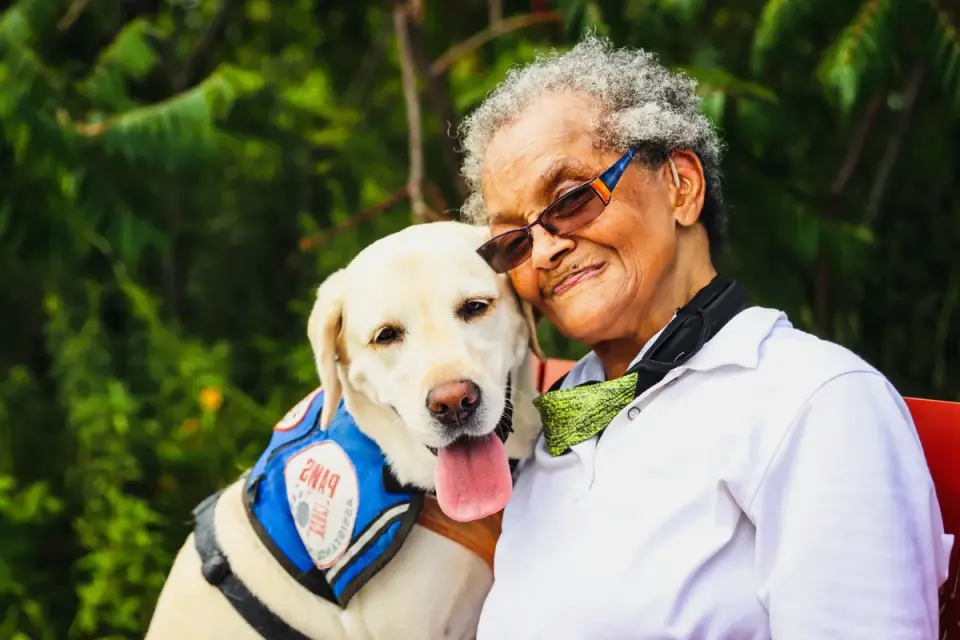
These dogs often work as a team with a parent or caregiver holding a second leash. Check the school or facility policy in writing before you assume access rules.
How to respect a working team in public
Want a simple check you can use today? Notice, pause, give space.
- Notice the harness or focused heel position.
- Pause your greeting. Do not call, pet, feed, or let your dog approach.
- Give space at doors, elevators, and checkout lines.
If you own a pet dog, train a solid leave-it and a U-turn away from vests. Passing off a pet as a service dog harms real teams. Staff still can ask what task the dog performs, and a poorly behaved dog can be asked to leave.
When should you seek help? Contact your veterinarian or a credentialed service-dog organization if you need task ideas for a specific disability, if mobility work involves weight or pulling, or if training stalls for more than a few weeks. For ongoing training enrichment, the same short, reward-based reps used in How to Keep an Aging Dog’s Brain Active and Engaged help working focus, and timing around growth and aging described in How Old Does a Dog Have to Be Before Signs of Aging Typically Start? helps you plan workload across a career.
The sign to act on is clear. If the dog performs at least one trained task that reduces disability-related limits, it fits the service-dog category. If it only comforts by presence, it does not.
Frequently asked questions
What is the difference between a service dog and an emotional support dog?
A service dog is individually trained to perform tasks tied to a disability. An emotional support animal provides comfort by presence and does not have the same public-access rights.
Do service dogs have to wear a vest or carry papers?
No special vest or certificate is required under federal rules. Staff may ask if it is a service animal and what task it performs. Behavior and task training are what matter.
Sources
- Service Animals FAQs — U.S. Department of Justice
- Types of Assistance Dogs — Assistance Dogs International