Skip home hairball remedies for dogs and call your vet if retching repeats, since true hairballs are rare in dogs.
Does your dog cough up hair and you wonder if it is a hairball? In dogs it almost never is.
Dogs groom differently than cats. They lick less, swallow less hair, and their stomachs move material through. A clump of hair in vomit usually means the dog ate shed hair off the floor, bedding, or during chewing, then vomited for a separate reason. Think stomach upset, eating too fast, swallowed grass or toy pieces, kennel cough, or acid reflux. VCA Hospitals lists many common causes of vomiting in dogs, and hairballs are not the pattern vets expect.
Why true hairballs are a cat problem
Cats are built to get hairballs. Barbed tongues, daily grooming, and a narrow esophagus make swallowed hair collect into tubes.
Dogs lack that cycle. When I hear about repeated retching in a dog, I run a three-step check. Note when it happens. Look at what comes up. Watch breathing, appetite, and energy that same day. Hair mixed with food, bile, foam, or blood points back to the stomach, throat, or airway. Hair alone after chewing a fuzzy toy points to the toy.
What you can safely do at home today
Start with the simple thing. Remove the hair source and settle the stomach.
Brush out loose coat, vacuum bedding, and put fuzzy toys away for a few days. Feed a normal bland meal on schedule, offer fresh water, and keep the walk calm. Do not give butter, coconut oil, mineral oil, petroleum jelly, pumpkin overloads, or cat hairball paste. Oils can trigger vomiting or aspiration, laxatives can mask a blockage, and pastes are dosed for cats, not dogs.
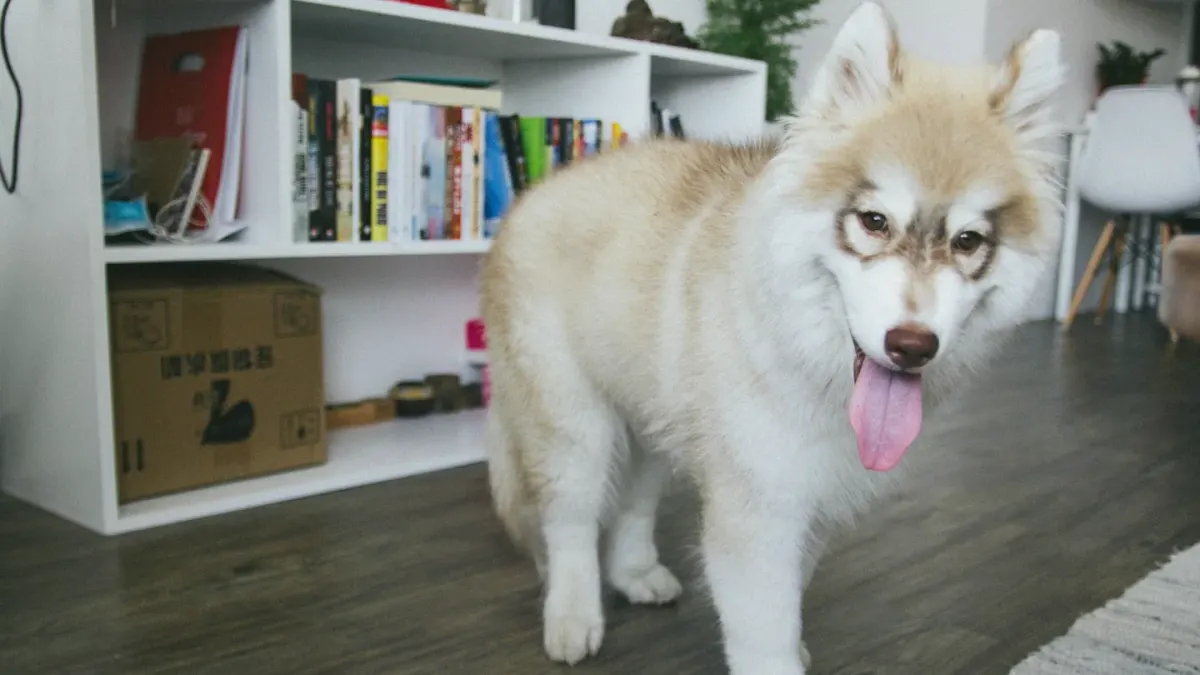
Kathryn in Clovis told me her 10-year-old Siberian Husky, Nellie, left hairy vomit twice during spring shed. Both times Nellie had licked hair off her bed and eaten breakfast too fast. Brushing daily, washing the bed cover, and using a slow-feeder bowl stopped it. That pattern — shedding season plus gulping — is common in older double-coated dogs. Age itself can also change digestion and coat turnover, which is why I often review basics like How Old Does a Dog Have to Be Before Signs of Aging Typically Start? and How Collagen Production Changes as Dogs Age when owners of seniors ask about hair and gut changes.
When a vet visit is the safer next step
Call your vet promptly for repeated retching with no vomit, nonstop coughing or gagging, drooling and distress, swollen belly, trouble breathing, lethargy, no appetite for more than a day, diarrhea with blood, or any chance of a swallowed toy, sock, bone, or chew. Puppies, flat-faced breeds, and seniors dehydrate and obstruct faster.
Bring a short log. Date, time, food and treats, what the vomit looked like, and a photo if you can. Your vet will check throat, lungs, belly, and hydration, and may suggest x-rays or bloodwork. One episode with known hair chewing and a normal dog after is often watch-and-wait. A pattern is not.
The sign that should change your next action is repetition. One hairy spit-up after chewing a rug toy is cleanup. Twice in a week, weekly retching, weight loss, or cough means stop testing kitchen fixes and get an exam.
Frequently asked questions
Can dogs get hairballs like cats?
True hairballs are rare in dogs. Hair in a dog's vomit usually comes from licking shed hair or chewing fuzzy items, with vomiting from another cause.
Is pumpkin or oil a good home remedy for dog hairballs?
No. Oils and cat hairball pastes can cause vomiting or hide a blockage. Brush loose hair, wash bedding, feed normally, and call your vet if retching repeats.
When should I worry about retching or gagging?
Seek prompt care for unproductive retching, breathing trouble, drooling, belly swelling, lethargy, bloody vomit or stool, or possible foreign-body ingestion.
Sources
- Vomiting in Dogs — VCA Hospitals