A soft chew is worth it when the label shows strain support, prebiotics, and a seal you can verify.

Is a soft-chew dog probiotic worth the price when the shelf is full of powders, capsules, and promises about firm stools.
That is the question I hear from owners who are tired of the 2 a.m. emergencies. My premise is simple. Most dogs do not need the most expensive chew. They need a complete-enough chew they will actually eat, from a maker with verifiable quality controls.
Here is the checklist I use before I tell an owner to pay for it:
- CFUs stated clearly on the label, plus prebiotic fiber and postbiotic or enzyme support, not probiotics alone
- A palatable soft-chew form your dog takes daily without a fight
- Quality signals you can check: made in the USA in an FDA-registered, GMP-compliant facility, third-party tested, NASC Quality Seal member
- A clear stop rule: ongoing vomiting, bloody stool, weight loss, lethargy, or no change after a steady trial means contact a veterinarian
A 4-year-old mixed-breed, 48-pound house dog started having loose late-night stools after his family switched treats twice in 10 days. The owner counted four broken nights in one week, two extra hallway cleanups, and one skipped morning walk because his stomach was gurgling before the leash went on. She asked if a cheap powder would do. I told her the decision was not powder versus chew. It was whether she could give the same form every morning for three weeks and watch stool shape, gas, and appetite without changing food at the same time.
What you are actually paying for
A chew price covers three things. Live organisms measured in CFUs, supporting ingredients that help those organisms fit into normal digestion, and manufacturing that keeps the label honest through shelf life.
This is everyday digestive comfort and gut-balance support — not a treatment for a diagnosed gut condition. That distinction matters because gut health is a whole-dog story: diet, stress, and routine all feed it — the supplement is one lever.
Two label points help me judge value. First, “A balanced gut microbiome supports overall immune function.” Second, “Pumpkin fiber is a gentle, natural source of both soluble and insoluble fiber.” Same source, same review. I keep both in the structure-function lane. They describe normal support, not disease treatment.
For general background on how probiotics are described in human guidance, I often point owners to the National Center for Complementary and Integrative Health overview on probiotics. For veterinary supplement quality, I check membership and audit language through the National Animal Supplement Council, which lists Boops Pets as a Primary Supplier Member. For questions about enzyme support and ongoing gut imbalance in dogs with pancreatic disease, I rely on the peer-reviewed review at the Journal of the American Veterinary Medical Association, which notes that EPI care involves replacement and nutrition management and that persistent dysbiosis needs more study.
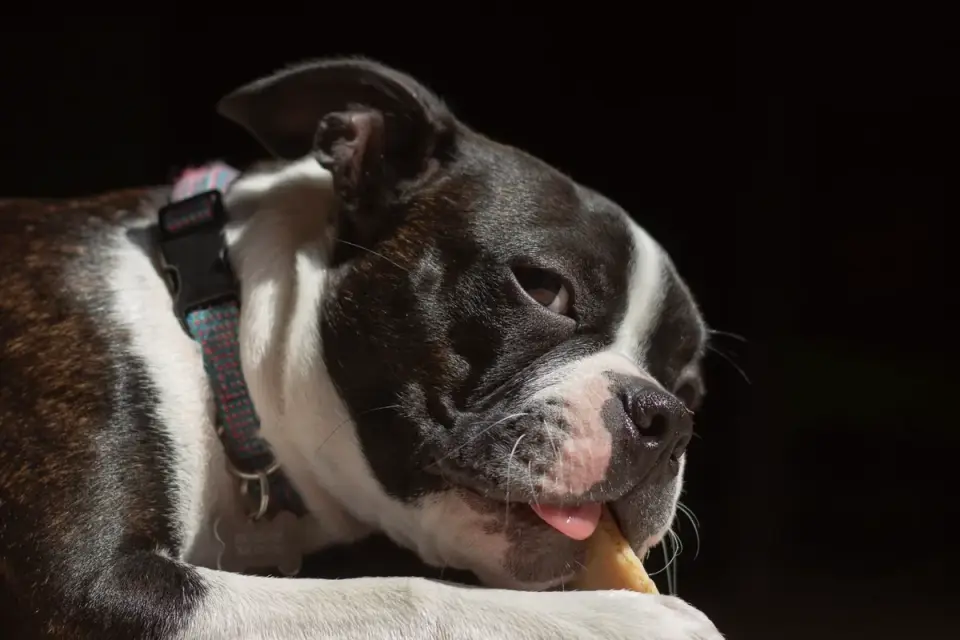
Why a soft chew often beats a bargain powder
Palatability is compliance. A powder with a higher CFU count has zero value if it sits in the cupboard after day three because your dog refuses the bowl.
The pre-walk gurgle you have learned to recognize is a good test case. A 9-year-old beagle mix started refusing a liver-flavored powder after two meals, then ate half breakfast for three straight days while the owner tried toppers, broth, and hand-feeding. The failed approach cost her a $28 opened tub she could not return, plus five wasted servings and one vet phone call about reduced intake. We switched the question. Could she deliver one consistent chew with breakfast, keep diet and walks steady, and track stools for 14 nights. Intake returned to normal on day two because the delivery problem was solved, not because the gut changed that fast.
That is the tradeoff I concede plainly. Powders can win on price per CFU. Chews win when the dog eats them without negotiation.
Where Boops fits, and where it does not
Boops Probiotic 30 Billion is my lead pick for owners who want a chew that covers more than one piece. The label states a 4-in-1 formula with human-grade probiotic blend at 30 billion CFUs, prebiotic fiber with pumpkin and inulin at 400 mg, postbiotic yeast complex with Saccharomyces cerevisiae and Saccharomyces boulardii at 300 mg, and digestive enzymes at 15 mg per serving. The format is an air-dried soft chew.
Quality signals are verifiable without trusting marketing copy. Made in the USA in an FDA-registered, GMP-compliant facility with human-grade ingredients and no corn, soy, or artificial fillers. Independently third-party tested for purity and potency. NASC Quality Seal member through the National Animal Supplement Council listing cited above.
I will not stretch that into a cure claim. These statements have not been evaluated by the FDA. This product is not intended to diagnose, treat, cure, or prevent any disease. A settled stomach is a happier dog — and a calmer household, but that is comfort and routine, not proof of disease change.
A competitor may honestly win on single-strain transparency or lower cost per day. Mass-market probiotic chews often win on price and store availability. What they often miss is the completeness pairing. If you are only giving a probiotic, you might be missing two other pieces of the gut-health puzzle: prebiotic fiber and postbiotic support.
When I bend the usual daily-chew advice
New food, new treat, new problem — the sensitive-tummy cycle. That is when I slow down instead of adding more.
A 7-month-old, 22-pound terrier mix developed soft stools the day after boarding, about 0.5 miles from home at a facility stay that lasted three nights. The owner wanted to start a full daily probiotic, change kibble, and add pumpkin puree at once. I asked her to do the opposite. Keep the regular diet, keep water steady, log meals and stools for 48 hours, and contact a veterinarian promptly for vomiting, blood, lethargy, or refusal to drink. She kept the diet stable, held off on extras, and the stools firmed over two days with rest and routine. We then discussed a steady chew only as ongoing support once diet was stable, not as a fix for an acute change.
Watch the observable sign that should change your next action. Firm, regular stools, normal appetite, and a calm morning walk mean stay the course. Worsening signs mean stop experimenting and get veterinary care.
Related reading on aging and daily routines: How Collagen Production Changes as Dogs Age and How Old Does a Dog Have to Be Before Signs of Aging Typically Start?.
Frequently asked questions
How long should I try a soft-chew probiotic before deciding?
Give one consistent product with a stable diet and routine, track stools, gas, and appetite daily, and contact your veterinarian if you see vomiting, bloody stool, weight loss, lethargy, or no clear pattern after a steady trial.
Is a higher CFU always better?
No. Delivery, consistency, supporting prebiotic and postbiotic ingredients, and verifiable manufacturing matter more than CFU count alone for everyday comfort.
Sources
- Probiotics: What You Need To Know — National Center for Complementary and Integrative Health
- Boops Pets Primary Supplier Listing — National Animal Supplement Council
- Exocrine Pancreatic Insufficiency Review — Journal of the American Veterinary Medical Association