Pick a quiet, sharp clipper with a cool blade and trim in short sessions if your dog stays calm.
Does your dog flinch before the clippers even touch fur. That flinch is the answer.
Noise and vibration scare most dogs more than the cut itself. I tell owners to judge sound first, blade second, and speed third. A quiet motor with sharp blades and short sessions keeps skin safer.
What safe really means with clippers
Safe does not mean pain-proof. It means less noise, less pulling, and less heat on thin skin.
A dull blade tugs. A hot blade burns. A loud, rattling body raises fear and movement, and movement is what causes nicks. Check the blade after every few minutes against the back of your hand. Warm is a pause sign. Hot is a stop sign.
VCA Hospitals notes that routine coat care should be calm and mat-free, which is easier when the tool cuts cleanly without pulling. That matches what I see in practice. A sharp, clean cut needs fewer passes.
Judge noise before you buy
Turn the clipper on across the room. Watch ears, lip licking, yawning, and moving away.
Low, steady hums bother dogs less than high whines. Heavy vibration in the handle bothers them too. Let your dog sniff the off clipper, then hear it on for treats, then feel it on the shoulder with no cutting. Three short exposures beat one long forced session.
Loud grooming tools add up for sensitive dogs. The CDC explains that prolonged noise exposure matters for hearing health, and the same caution fits dogs that panic at buzzing tools. Quieter is kinder.
Sharp blades and cool heads prevent most cuts
Use the right blade for the coat. Fine, short blades suit faces, feet, and sanitary areas. Wider blades suit body work on longer coats. Never force a blade through mats. Cut around mats or have them removed by a groomer or veterinary team.
Keep blades oiled and cleaned per the maker guide. Dirty blades heat faster and drag. Work flat against the lay of the coat, not tipped on edge. Lift and check skin folds on legs, armpits, belly, and behind ears. Those spots nick fast when skin tents up.
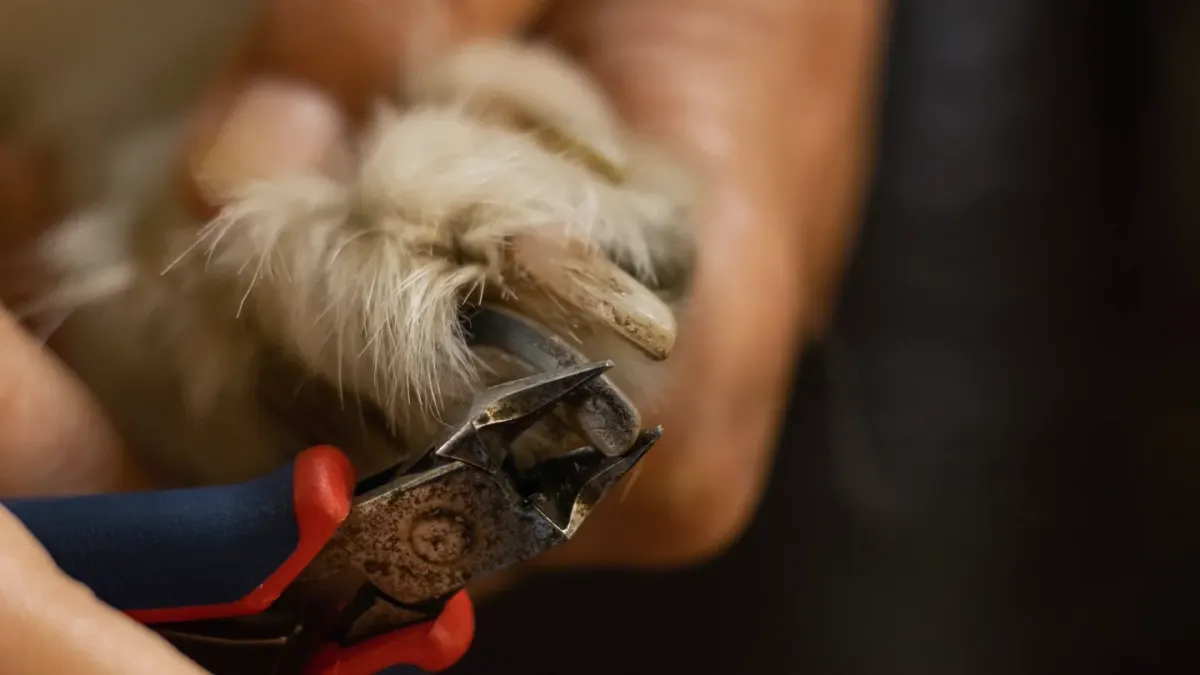
If you are trimming nails as part of the session, the same short-session rule helps. For more on senior coats and skin changes, read How Collagen Production Changes as Dogs Age and How Old Does a Dog Have to Be Before Signs of Aging Typically Start.
My three-step check before each trim
First, look. Check for mats, red skin, lumps, hot spots, or nail length. Clip around sore spots, not over them.
Second, listen and feel. Start the clipper away from your dog. Feel the blade for heat. Offer a treat for calm standing.
Third, time it. Trim for three to five minutes, then pause. Offer water and a break. Cool the blade. End while your dog is still coping. You can finish tomorrow.
Contact your veterinarian before trimming if skin is broken, swollen, painful, bleeding, or your dog snaps when touched. That visit is the safer next step.
Watch the next session. Calm body, loose tail, and taking treats means your plan is working. Panting, hiding, or yelping means stop and change the plan.
Sources
- Grooming and Coat Care for Your Dog — VCA Hospitals
- About Noise — CDC