For stiff joints, short flat leash walks work best, with swimming added if your vet approves and soreness stays down.

Does your dog rise stiff after a nap, then walk it off in a minute or two. That short warm-up stiffness is common with aging joints, and gentle daily movement often helps more than full rest.
Felicia in Abilene noticed it in Brandie, her 7-year-old spayed female Greyhound mix. Brandie hesitated at the back steps each morning, then moved better after a slow walk around the block. Felicia switched from one long walk to two short flat walks, and Brandie rose faster the next morning. That response is the target.

Which low-impact exercise is best
For daily care, level leash walking helps most dogs with stiffness. It builds leg muscle that supports sore joints, it is easy to shorten or extend, and you can watch the gait the whole time. Guidance from VCA Hospitals notes that controlled activity and weight control help dogs with arthritis stay mobile.
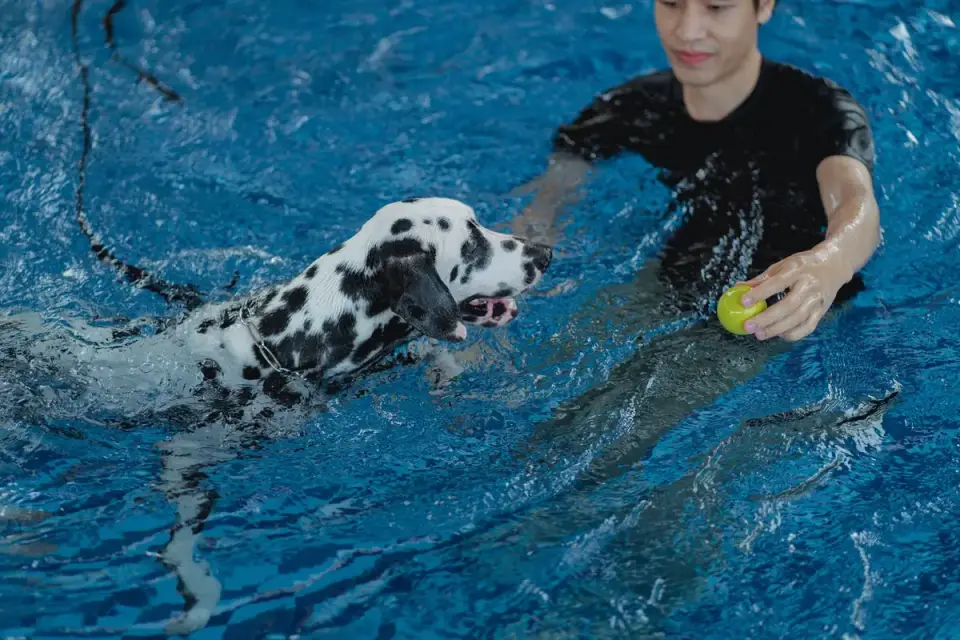
Swimming is next when a dog likes water and has safe access. Water unloads the joints while muscles work. Keep sessions short and calm, use a well-fitted life jacket for weak swimmers, avoid cold water and repeated leaping retrieves, and rinse off after. Underwater treadmill work at a rehab clinic is another option for dogs that need closer supervision.
Gentle mobility work fills the gap on sore days. Try slow weight shifts, three to five sit-to-stand repetitions on a non-slip rug, low cavaletti poles, and sniff games. Pairing light movement with thinking work helps, as described in How to Keep an Aging Dog’s Brain Active and Engaged.
How much movement helps without flare-ups
Think short and often. Start with 5 to 10 minutes of flat walking, twice daily, at the dog’s pace. Add about 5 minutes per walk only if there is no extra limping that evening and no added stiffness the next morning.
Use these three checks each week. First, warm up for 2 to 3 minutes at a slow walk before any longer effort. Cold joints after rest need time, a pattern seen as dogs age, as explained in How Old Does a Dog Have to Be Before Signs of Aging Typically Start?. Second, keep footing kind with grass, dirt trail, carpet runners, or rubber mats, and keep nails trimmed and weight lean. Third, track the 24-hour response with walk length, limp severity, and rise time the next morning.
When should exercise stop and vet care start
Stop the session if your dog sits and refuses to move, holds up a leg, pants hard long after stopping, or yelps when a joint is touched. Contact your veterinarian promptly for non-weight-bearing lameness, swollen or hot joints, fever, loss of appetite, or stiffness that worsens over 1 to 2 weeks despite lighter exercise.
Watch the morning test. Easier movement within 10 minutes of starting, with the same or less stiffness the next day, means the dose was right. More limping that night means you did too much and should cut the next outing in half.
Frequently asked questions
How long should I walk a dog with stiff joints?
Start with 5 to 10 minutes twice daily on flat ground, then add time slowly only if limping and morning stiffness do not increase.
Is swimming good for a stiff dog?
It can be, because water reduces joint load while muscles work. Keep sessions short, supervised, and calm, and ask your vet first if your dog has heart disease, breathing problems, or open skin wounds.
Should a stiff dog rest completely on bad days?
Full rest often increases stiffness. Try a very short leash walk, gentle indoor movement, and sniff games instead, and call your vet if lameness is sudden or severe.
Sources
- Arthritis in Dogs — VCA Hospitals