Many dogs like a sweet spot scratch, but stop if your dog tenses, moves away, or stops the leg kick.

Does your dog kick fast when you find that belly or side spot. That kick answers part of the question.
Many dogs enjoy light scratching there. The kick itself is a scratch reflex, not proof of joy. Watch the rest of the body to know if you should keep going.
I look at three things in the exam room: loose body or tense body, engaged or moving away, and skin that looks normal or red and flaky. That quick check tells you more than the leg does.
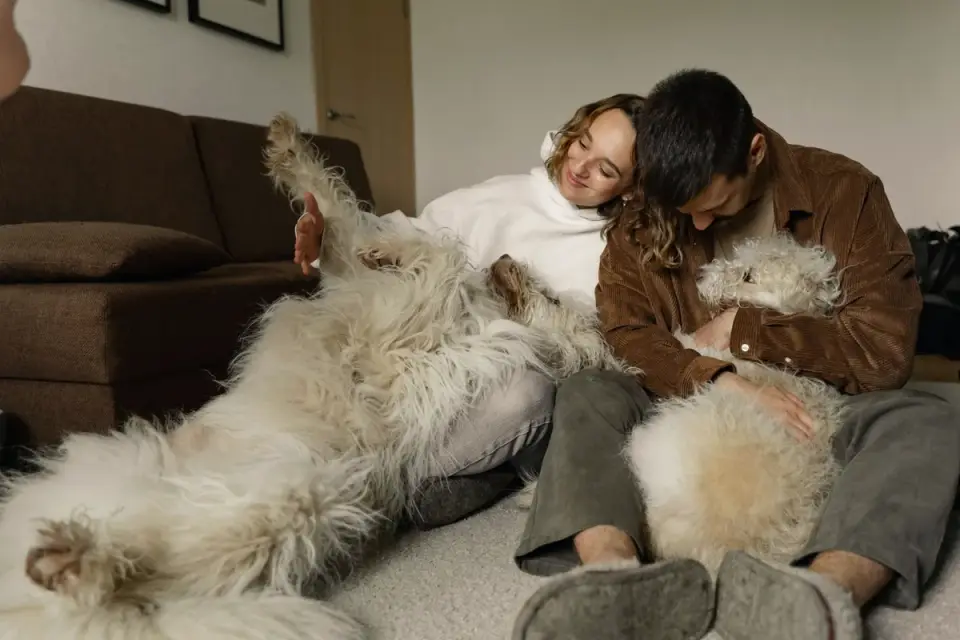
Why the leg kicks without permission
The sweet spot is usually the belly, lower chest, or side near the back leg. Nerves there feed into the spinal cord. Light scratching can trigger an automatic scratch reflex.
Think of it like a knee-jerk test. Your dog is not choosing to kick. The signal loops through the spine before the brain fully weighs in.
That is why the National Library of Medicine describes this kicking as an involuntary scratch reflex, not a simple like button. A dog can kick and still feel annoyed. A dog can also stay still and love the attention.
Use the kick as information. Use the face, tail, and weight shift as the decision.
Signs your dog wants more
Keep scratches light and slow. Give your dog room to stay or leave. Look for a yes in the whole body.
Signs to continue for another few seconds:
- soft eyes, loose mouth, weight leaning toward you
- tail making wide, easy sweeps, not tucked or stiff
- dog nudges your hand back when you pause
- belly stays relaxed, breathing stays even
This is the same consent idea I use for all petting. Pause every 5 to 10 seconds. A dog that wants more will re-ask. Learn more about choice in Dogs Feel Happy When Petting Is Their Choice and the body cues in Do Dogs Like Being Pet or Just Tolerate It?.
Signs to stop scratching now
Stop when the body tightens, even if the leg is still kicking. Common stop signals are lip licking, yawning, turning the head away, skin twitching, tail tucking, getting up, or moving your hand away with a nose nudge.
Also stop if scratching seems too intense. Fast nails, hard pressure, or long sessions on one spot can irritate skin. Switch to a flat hand and slow chest rub, then let your dog reset.
If you see those cues often during touch, shorten sessions and offer contact only when your dog initiates.

My three-step check before you keep going
Start with the owner question: does my dog like this right now.
- Look first. Coat parted or belly exposed. Check for redness, flakes, scabs, hot spots, flea dirt, or a new lump. Do not scratch over broken skin.
- Test light. Use fingertips for three seconds on the edge of the sweet spot, not the center. Pause with your hand still.
- Let the dog vote. More leaning in and soft body means you can continue briefly. Any freeze, stand up, snap, or walk away means you stop for the day.
Contact your veterinarian promptly for itching with hair loss, odor, swelling, constant licking or chewing, a painful yelp when touched, or skin changes that spread. Those signs point past normal ticklishness.
Where most dogs prefer touch
Many dogs prefer the chest, side of the neck, and shoulders over long belly rubs. The belly sweet spot can feel vulnerable for some dogs. Try a side-lying scratch near the ribs with light pressure.
Keep nails short and hands calm. Avoid the nipples, genitals, any wound, and areas with mats. For senior dogs or dogs with back or hip pain, keep them standing or lying comfortably and do not pat hard near the spine or hips.
End while it is still good. A short session that ends with a loose tail and soft face builds trust for next time.
Frequently asked questions
Is the sweet spot kick a sign my dog is happy?
Not by itself. The kick is an automatic scratch reflex. Look for a loose body, soft face, and your dog leaning in or re-asking when you pause.
Why does my dog nip or move away when I scratch the sweet spot?
The spot can feel ticklish or irritating with too much pressure. Stop, give space, and check the skin for redness, flakes, scabs, or fleas.
Should I scratch harder to get a bigger kick?
No. Harder scratching irritates skin and can make dogs anxious. Use light fingertips for a few seconds, pause, then continue only if your dog asks for more.
When should I call the vet about scratching and kicking?
Call for new itching with hair loss, odor, sores, swelling, constant chewing or licking, pain when touched, or skin changes that spread or do not improve in a day or two.
Sources
- Neuroanatomy, Spinal Cord Reflexes — National Library of Medicine