Pheromone diffusers may take the edge off mild stress, but they don't replace training or vet care.
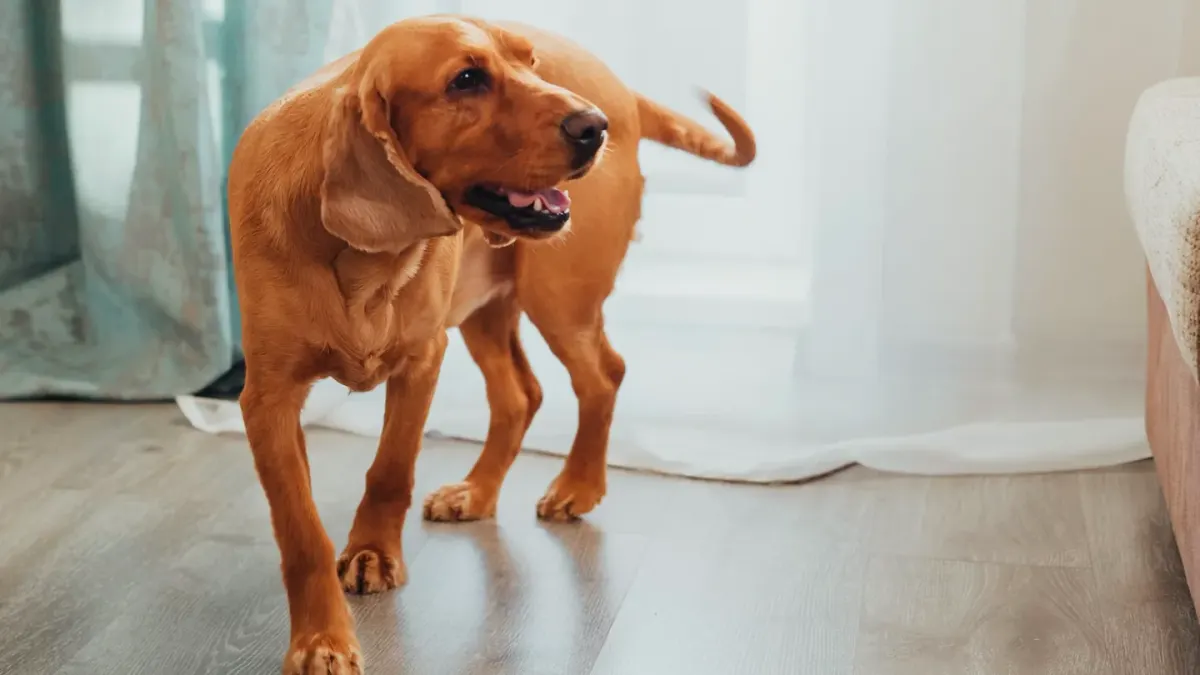
Does the plug-in by the couch actually calm your dog, or just calm you? The short answer is plain. Pheromone diffusers may help a little with mild unease, but they do not fix fear, panic, or separation distress on their own.
Use this quick checklist before you buy one.
- Match the sign to the trigger. Note what happens, when it starts, and how long it lasts.
- Cover the basics first. Sleep, pain, noise, new routine, and alone-time training matter more than any plug-in.
- Set a two-week test. Keep routine steady, track one or two signs, and call your veterinarian if signs worsen or include panting at rest, drooling, escape attempts, or loss of appetite.

What these diffusers claim to do
Most dog diffusers release a synthetic version of the dog-appeasing pheromone. Nursing dogs produce the natural scent, and puppies learn it as a safety cue.
The idea is simple. The familiar scent signals safety. The dog stays a bit calmer in a strange or tense moment.
That does not mean the dog feels drugged or sleepy. Think background cue, not sedative.
My premise, then what the evidence allows
I start from this premise. Calm comes from felt safety, not from scent alone.
A diffuser can support a calm setup. It cannot teach a dog that thunder, visitors, or being alone is safe.
Published work on appeasing pheromones shows mixed and modest effects. Some dogs settle a bit faster. Many show no clear change. Results shift with context, dose in the air, room size, and what else the owner changed at the same time.
That is why I treat a diffuser as an add-on. Training, predictability, and pain checks do the heavy lifting.
The three-step check I want every owner to run
Translate the worry into something you can watch.
1. What do you see, and when? Write down pacing, lip licking, yawning, whining, hiding, barking, or destruction. Add time of day, trigger, and recovery time. A dog that settles in 10 minutes after you leave is different from a dog that pants and paces for two hours.
2. What changed around the dog? Move, new work hours, new baby, less sniff time, stiffness on stairs, or a recent illness can raise baseline stress. Older dogs may also show confusion or night restlessness, which overlaps with anxiety. If you are seeing age shifts, this piece on how to keep an aging dog’s brain active and engaged and the signs in how old does a dog have to be before signs of aging typically start can help you sort what to report.
3. What will you test for two weeks? Plug the diffuser in the room where the dog rests most, not in a hallway. Keep departures boring and short at first. Keep walks and bedtime steady. Track the same one or two signs daily. If nothing changes in 14 days, stop and regroup.
Contact your veterinarian sooner if stress signs are intense, new, or paired with vomiting, diarrhea, limping, heavy panting at rest, or aggression. Those signs deserve a medical check first.
Where a diffuser fits best, and where it stops
It fits best for mild, predictable stress. Vet visits, travel, a new crate routine, or short fireworks season. Pair it with distance from the trigger, white noise, a chew, and calm practice.
It stops winning when panic takes over. A dog that injures teeth on the crate, breaks windows, or cannot eat needs more than scent. General behavior guidance from VCA Hospitals and veterinary resources through Cornell University College of Veterinary Medicine makes the same point. Rule out medical causes, then build a training or medication plan with your veterinarian or a qualified behavior professional.
Vets often see this pattern. Take Shelley in Winston-Salem with Nikko, a 3-year-old neutered male Cavapoo. He paced and whined for about 20 minutes after departures. The diffuser went in the living room where he napped. Shelley kept departures under 30 seconds at first, then built up over 10 days. The pacing shortened, but the short practice sessions did most of the work.
That is the honest role. Helpful background, not the fix.
How to use one without wasting money
Pick one room. Close windows near the outlet. Leave it plugged in around the clock during the test. Do not place it behind furniture or near an air purifier exhaust.
Keep expectations narrow. You are looking for a small shift. Faster settle, less whining, easier redirect. Not total silence.
Stop and call your veterinarian if the dog avoids the room, coughs, sneezes more, or seems irritated by the scent. Unplug it and air the room.
One short paragraph matters here. If your dog is already on behavior medication, do not change anything without your veterinarian.
And one more. A diffuser never replaces a vet visit for sudden behavior change.
Frequently asked questions
How long should I try a pheromone diffuser before deciding it works?
Give it a steady two-week trial in the dog's main resting room while routine stays the same, and track one or two signs daily. If there is no clear change, unplug it and talk with your veterinarian about training or medical next steps.
Can a diffuser stop separation anxiety?
No. It may soften mild unease, but true separation distress needs alone-time training, trigger practice, and often a veterinary exam to rule out pain or illness.
Are pheromone diffusers safe around other pets?
Most are made for continuous home use, but watch every animal in the room. Unplug and ventilate if you see sneezing, coughing, avoidance, or skin and eye irritation, and ask your veterinarian.
Sources
- Separation Anxiety in Dogs — VCA Hospitals
- Veterinary Resources — Cornell University College of Veterinary Medicine