Skip the online certificate and registry — no card makes a dog a service dog, only trained disability-related tasks plus steady public behavior do.

Does your dog calm you when you feel anxious, and you wonder if that qualifies as a service dog for emotional support. Comfort alone does not meet the legal test. Under federal law, a service dog is a dog individually trained to perform tasks tied to a handler’s disability, plus house-trained behavior in public. Emotional comfort, companionship, and being well behaved are not tasks by themselves.

What does the law actually require
No federal certification, vest, ID card, or online registry is required. The U.S. Department of Justice explains that service animals are not required to be professionally trained, certified, or registered, and businesses may ask only two limited questions about disability need and trained tasks.
That means anyone selling a fast certificate, lifetime registration, or official emotional-support service-dog kit is selling paper, not legal status. A vest may signal access, but it grants no rights if the dog is not task-trained.
Service dog, emotional support animal, or therapy dog
These labels sound similar and work very differently.
A service dog performs a specific trained action tied to a disability. Examples include guiding, alerting to sounds or medical events, retrieving medication, applying deep pressure during a panic episode on cue, or creating space in a crowd.
An emotional support animal provides comfort through presence. No task training is required. ESAs have housing protections in many cases, but they do not have public-access rights to restaurants, stores, or other public places.
A therapy dog visits other people in hospitals, schools, or care settings with handler permission. That work is valuable, and it is also not service work.
For flights, the U.S. Dept of Transportation now treats only trained service dogs as service animals for air travel, with DOT forms and behavior standards.
Can Brady or Ladybird qualify
Use behavior you can observe today. Brady, a 4-year-old neutered male hound mix from St. Louis, settles quickly in new rooms, ignores food on the floor when asked, and recovers fast after loud sounds. Those traits make task training more realistic.
Ladybird, a 3-year-old spayed female Brussels Griffon mix from Portland, barks at strangers, pulls toward other dogs, and needs long recovery time after stressful outings. Finding trainers who understood our particular struggles took more searching than expected for owners in that spot, and that dog needs foundation work first.
Run this three-step check:
- Health and temperament. Calm in crowds, neutral around people and dogs, tolerant of handling, no bite history, and no uncontrolled fear or reactivity.
- Obedience under distraction. Sit, down, stay, heel, leave it, recall, and a long settle on a mat in stores, clinics, and transit areas.
- One disability-related task. Pick a trainable action you can name, cue, and repeat, not general comfort.
If any step fails, pause service-dog plans and work on that step. Contact your veterinarian when fear, reactivity, house soiling, or sudden behavior change appears, since pain, thyroid disease, cognitive change, and anxiety disorders can look like a training problem. Mental enrichment still helps while you decide, and structured brain work such as the ideas in How to Keep an Aging Dog’s Brain Active and Engaged and early aging awareness from How Old Does a Dog Have to Be Before Signs of Aging Typically Start? can support focus during training.
What real training looks like
Plan on months, often 12 to 24, with daily reps. Most owners need help from a trainer experienced with service tasks, plus practice in real public settings.
Start with obedience and public manners. Your dog should walk quietly at your side, hold a down under tables, ignore food and other dogs, tolerate elevators and automatic doors, and recover quickly when startled. Brief, slow outings with quiet praise for settling build that steadiness better than long, overwhelming trips.
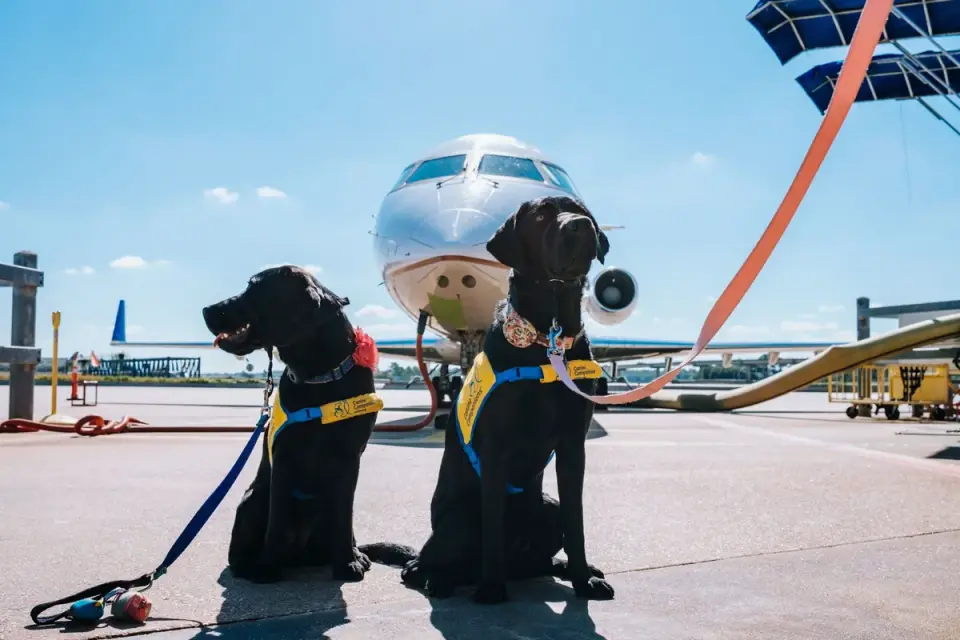
Then add one task at a time. Train it at home first, then add distance, duration, and distraction. Keep notes on cues, success rate, and behavior in public. A dog that cannot maintain obedience in a busy store is not ready for access work, even if the task looks good at home.
Passing cars seemed to overwhelm some puppies during walks, and that kind of overload is a signal to shorten distance and rebuild focus before adding harder places. For dogs that notice another dog unexpectedly and then keep walking without the usual intense reaction, that quick recovery is the sign training is moving in the right direction.
If you want an ESA for housing rather than a service dog for public access, talk with your own licensed health care provider about an ESA letter and review landlord rules first. Do not buy a template letter from a certificate site.
When not to pursue this path
Skip service-dog training if your dog shows aggression toward people or dogs, extreme fear that does not improve with careful training, high prey drive you cannot interrupt, or chronic reactivity in public. Age and health also matter. Senior dogs with pain, vision loss, or cognitive decline often do better as companions at home, and related reading on How Collagen Production Changes as Dogs Age and How Many mg of Nicotinamide Riboside Per Pound of Dog? can help frame that vet conversation.
The observable sign that should change your next action is simple. When your dog can perform one named disability task on cue and stay settled and neutral through a full errand, you have the start of service work. When the dog still barks, lunges, sniffs merchandise, solicits attention, or soils indoors, keep training outside public-access settings.
Frequently asked questions
Do I need to certify my dog as a service dog online?
No. Federal law does not require certification, registration, or ID cards. A dog becomes a service dog through individualized task training tied to a disability, plus reliable public behavior.
Can emotional support alone qualify my dog as a psychiatric service dog?
Comfort alone does not qualify. A psychiatric service dog must perform a trained task, such as interrupting repetitive behavior on cue, guiding during dissociation, or retrieving medication.
What should I do before paying a trainer or program?
Get a vet check, list the specific task you need, test basic obedience under distraction, and ask the trainer about task-training experience, methods, timeline, and how you will practice between sessions.
Sources
- Service Animals and the ADA — U.S. Department of Justice
- Air Travel with Service Animals — U.S. Dept of Transportation